Sophie Cunningham weighs in on Sydney Sweeney controversy: “Go do your thing, sis”Sophie Cunningham has never built her public image around staying silent when she has something to say, and her latest comments about actress Sydney Sweeney have once again generated attention well beyond the basketball court.
Sophie Cunningham weighs in on Sydney Sweeney controversy: “Go do your thing, sis”Sophie Cunningham has never built her public image around staying silent when she has something to say, and her latest comments about actress Sydney Sweeney have once again generated attention well beyond the basketball court.
This time, the Indiana Fever guard found herself discussing a very different corner of pop culture: the debate surrounding Sweeney and a sports-related advertisement that Cunningham felt was anything but subtle.
Rather than offering a simple defense or condemnation, Cunningham delivered a characteristically direct reaction. She questioned whether the partnership felt authentic, acknowledged exactly why the campaign was attracting attention, and ultimately defended Sweeney’s freedom to capitalize on her public image.
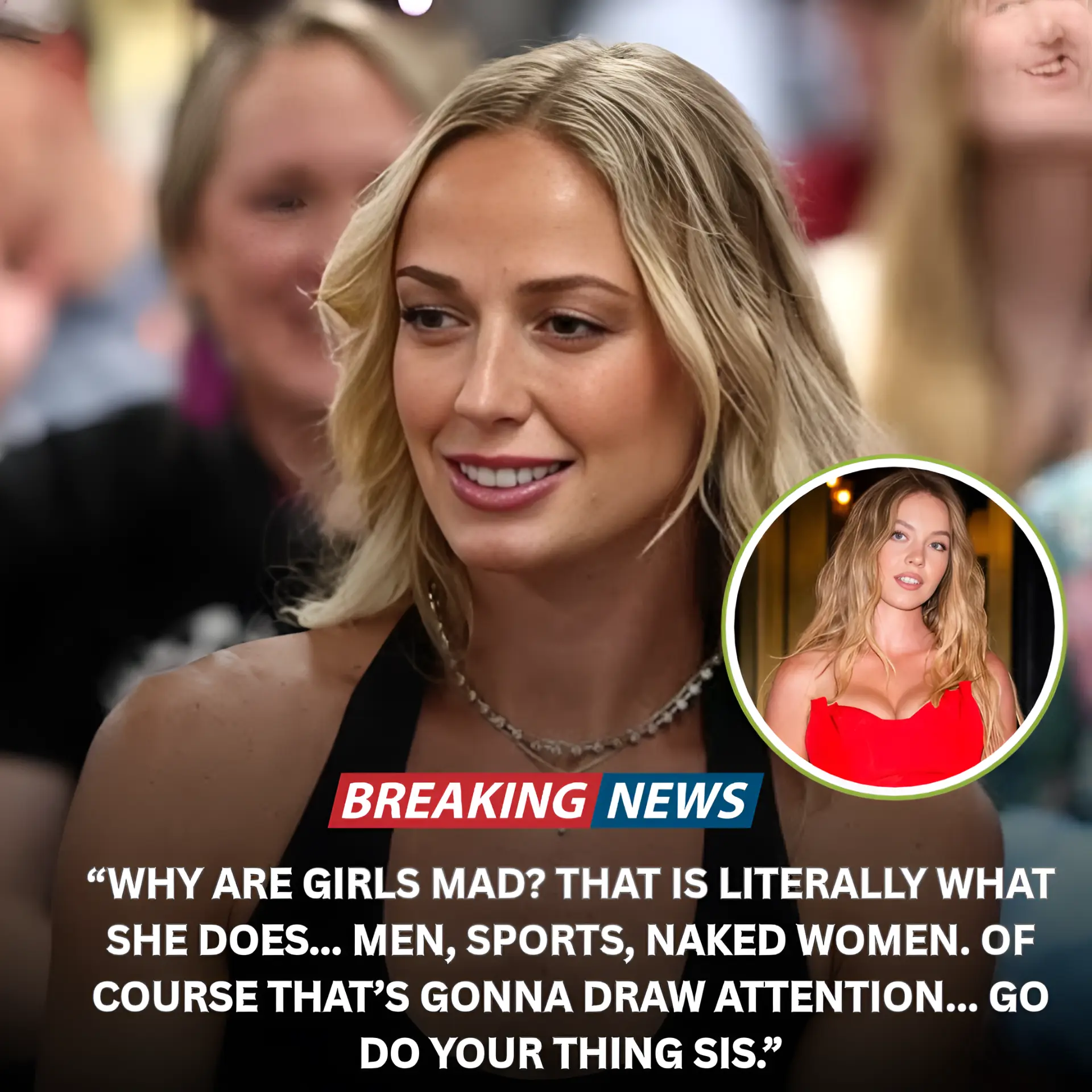
“Why are girls mad? That is literally what she does… men, sports, naked women. Of course that’s gonna draw attention… Go do your thing sis,” Cunningham was quoted as saying in the viral graphic circulating online.
It was the kind of remark almost guaranteed to spark conversation.
But Cunningham’s broader response was more nuanced than the headline alone might suggest.
She did not say she loved the advertisement. In fact, she openly questioned it.
At the same time, she was unwilling to criticize Sweeney simply for accepting an opportunity that aligned with the image the actress has cultivated throughout her career.
That combination — skepticism about the advertisement but respect for the person making the business decision — is what made Cunningham’s comments particularly interesting.
Cunningham questions the authenticity of the campaign
One of Cunningham’s strongest criticisms centered on authenticity.
“Does she even gamble on sports? It’s just so unauthentic,” Cunningham said.
That question goes directly to an increasingly important issue in celebrity advertising.
When a celebrity promotes a product, audiences often want to believe there is at least some natural connection between the spokesperson and what is being sold.
Actors promote beauty products.
Athletes promote sportswear.
Musicians promote headphones.
But modern celebrity marketing frequently goes much further, pairing recognizable faces with brands based primarily on their ability to attract attention.
Cunningham appeared skeptical about that dynamic.
Her point was not necessarily that Sweeney should never participate in a sports-oriented campaign. Rather, she questioned whether the connection between the actress and the subject of the advertisement felt genuine.
That distinction matters.
Cunningham could dislike the concept without attacking Sweeney personally.
And that is essentially where her comments landed.
“She sticks to her guns”
Despite questioning the advertisement, Cunningham quickly acknowledged something she respected about Sweeney.
“She sticks to her guns and she does her thing. She’s her. So, props to her.”
That remark changed the tone of the discussion.
Instead of presenting Sweeney as someone who had made an indefensible decision, Cunningham portrayed her as someone who understands her public image and is willing to own it.
Sweeney has become one of Hollywood’s most recognizable young stars, with her appearance, fashion choices and advertising campaigns regularly generating enormous online attention.
That level of visibility inevitably creates criticism.
Almost anything she does can become a cultural argument.
One group sees confidence.
Another sees calculated marketing.
Some see empowerment.
Others question whether the campaigns rely too heavily on se.xualized imagery.
Cunningham did not attempt to settle those broader debates.
Instead, she focused on something simpler: Sweeney has built a recognizable brand, and Cunningham respects her willingness to remain consistent with it.
Cunningham still wasn’t sold on the ad
That respect did not mean unconditional approval.
“Do I like that particular ad? Not really. What are we doing?”
The comment was short, but it captured the contradiction at the center of Cunningham’s reaction.
She was essentially separating two questions.
Was the advertisement something she personally liked?
No.
Did she believe Sweeney deserved to be attacked simply for participating in it?
Also no.
That distinction often disappears in social-media debates, where criticism of a particular decision can quickly become criticism of the person responsible for it.
Cunningham avoided that trap.
She could question the campaign while simultaneously acknowledging why Sweeney accepted it.
And from Cunningham’s perspective, the financial component was impossible to ignore.
“She’s making her money. Go do your thing, sis.”
That may have been the most memorable line of her entire reaction.
“Go do your thing, sis”
Those six words captured Cunningham’s ultimate position.
She did not need to love the advertisement.
She did not need to pretend it felt authentic.
She did not even need to understand every creative decision behind it.
Sweeney had been presented with a professional opportunity.
She accepted it.
And Cunningham was not interested in pretending that making money from a highly marketable public image was somehow shocking.
That attitude reflects the reality facing both entertainers and professional athletes.
Public figures increasingly operate as businesses.
Their careers extend beyond movies, television shows or basketball games.
They have sponsorships.
They build brands.
They appear in commercials.
They launch companies.
They sign endorsement deals.
Their social-media presence itself can become commercially valuable.
For someone with Sweeney’s visibility, advertising opportunities are naturally going to follow.
Cunningham seemed to view that reality pragmatically.
She might question the creative concept, but she was not going to condemn another woman for getting paid.
Why Cunningham’s reaction attracted attention
Part of the fascination comes from the unexpected crossover.
Sweeney exists primarily in Hollywood and entertainment culture.
Cunningham is a professional basketball player.
Yet celebrity culture, sports and advertising increasingly overlap.
Athletes become fashion figures.
Actors appear in sports campaigns.
Sports leagues collaborate with entertainment brands.
Players build audiences that extend far beyond traditional sports fans.
Cunningham herself has experienced that transformation.
Her profile has grown considerably as attention surrounding the Indiana Fever and women’s basketball has expanded.
That means comments that once might have remained inside basketball circles can now travel across entertainment pages, social platforms and celebrity news accounts.
A discussion about an advertisement can suddenly become part of a much larger cultural conversation.
And Cunningham’s willingness to speak casually and directly makes her especially suited to those viral moments.
She does not sound like a corporate statement.
She sounds like someone giving an immediate opinion.
That authenticity — ironically the very quality she questioned in the advertisement — helps explain why her comments travel.
The larger authenticity problem in celebrity endorsements
Cunningham’s question about whether Sweeney actually gambles on sports points toward a broader marketing challenge.
Consumers have become increasingly sophisticated about celebrity endorsements.
They understand that celebrities are being paid.
They know an advertisement is a commercial arrangement.
But audiences often still expect some believable relationship between the spokesperson and the product.
When that relationship seems obvious, the campaign can feel natural.
When it does not, audiences may become skeptical.
The issue becomes even more complicated with sports betting.
Sports gambling advertising has become increasingly visible in American professional sports as legalization has expanded across numerous states.
That growth has produced lucrative partnerships involving leagues, broadcasters, athletes, celebrities and betting companies.
It has also generated continuing debates about responsible gambling and the enormous reach of betting advertisements.
Against that backdrop, Cunningham’s question carries additional significance.
“Does she even gamble on sports?”
It is a simple sentence.
But beneath it is a larger question:
What makes a celebrity spokesperson credible?
Is fame enough?
Does the celebrity need to use the product?
Should there be a meaningful personal connection?
Or is advertising ultimately about attracting attention?
Cunningham appeared to believe authenticity still matters.
Attention is part of the strategy
At the same time, Cunningham recognized why a campaign involving Sweeney would attract enormous attention.
“Of course that’s gonna draw attention.”
That may be the least controversial part of her assessment.
Sweeney is an extremely recognizable actress whose advertising appearances routinely become social-media conversations.
Brands understand that.
Controversy itself can increase visibility.
People who love an advertisement share it.
People who hate it share it.
People who debate it share it.
Soon, millions of users who never would have intentionally searched for the campaign know exactly what is being advertised.
That is one of the paradoxes of modern marketing.
Criticism can become promotion.
Outrage can create reach.
A campaign does not necessarily need universal approval to be commercially valuable.
Sometimes it only needs people talking.
And people were talking.
Cunningham refuses to shame Sweeney
Perhaps the most notable element of Cunningham’s reaction was her refusal to turn criticism of the advertisement into a moral judgment about Sweeney.
She questioned the concept.
She questioned its authenticity.
She admitted she did not particularly like it.
Then she effectively said: make your money.
That is a much different response from demanding that Sweeney apologize, change her image or reject similar opportunities.
Cunningham instead treated Sweeney as an adult capable of making her own decisions.
That does not mean Cunningham endorsed every aspect of the campaign.
Her words clearly suggest otherwise.
But disagreement and respect can exist simultaneously.
That nuance can be difficult to preserve once a comment becomes a viral headline.
“Sophie Cunningham defends Sydney Sweeney” is simple.
The actual sentiment was more complicated.
She defended Sweeney’s freedom to do the advertisement.
She did not necessarily defend the advertisement itself.
Two women navigating intense public scrutiny
There is another reason Cunningham may understand Sweeney’s position better than most people.
Both women operate in professions where public scrutiny can become intensely personal.
Sweeney’s appearance is constantly discussed.
Her clothing becomes news.
Her advertising campaigns become debates.
Her interviews are dissected.
Cunningham experiences a different version of the same phenomenon.
Basketball performances are analyzed, but athletes are increasingly judged for everything surrounding the game as well.
What they wear.
What they post.
What they say.
Who they spend time with.
What brands they promote.
How they respond to criticism.
Female athletes in particular often find themselves navigating the intersection between sports performance and public image.
Cunningham therefore understands what happens when a person’s brand becomes larger than the original profession that made them famous.
That does not mean every endorsement deserves praise.
It does mean the business realities are difficult to ignore.
The business of being famous
For celebrities, visibility has economic value.
A recognizable face can sell products.
A large social following can attract sponsorships.
A viral moment can increase negotiating power.
The smartest public figures often understand that their earning potential extends beyond their primary profession.
For Sweeney, acting remains the foundation.
But advertising can become another major source of income and exposure.
For Cunningham, basketball remains central.
Yet sponsorships, media appearances and her expanding public profile can create opportunities outside the WNBA.
That shared reality makes Cunningham’s “she’s making her money” comment especially relevant.
She understands that careers are finite.
Opportunities can disappear.
Public attention changes quickly.
A celebrity who has leverage today may not have the same leverage five years from now.
Taking advantage of commercial opportunities is therefore not unusual.
It is business.
Why “authenticity” still matters
Still, Cunningham’s initial criticism should not be forgotten.
There is a reason she used the word “unauthentic.”
A lucrative partnership can make business sense while still feeling creatively disconnected.
Both things can be true.
Sweeney can have every right to participate.
Cunningham can have every right to dislike it.
Fans can decide for themselves whether the campaign works.
That is ultimately how advertising functions.
A brand creates a message.
A celebrity delivers it.
The audience responds.
Not every response will be positive.
And sometimes the criticism becomes part of the campaign’s cultural footprint.
Cunningham stays consistent with her own personality
Cunningham’s response also fits the public persona she has developed.
She tends to communicate directly.
There is humor in her delivery.
There is skepticism.
There is confidence.
And there is often an unwillingness to overcomplicate a situation.
Her Sweeney comments followed exactly that pattern.
She questioned the advertisement.
Then she gave Sweeney credit.
Then she essentially told everyone to stop being surprised.
That is why the remarks felt less like a carefully prepared statement and more like a genuine reaction.
Whether people agreed with her or not, they understood what she meant.
Criticism without condemnation
There is a broader lesson in Cunningham’s response that extends beyond this specific advertisement.
Online culture frequently treats disagreement as absolute.
If someone dislikes a campaign, people assume they dislike the celebrity.
If someone defends the celebrity, people assume they support everything the celebrity does.
Cunningham occupied the middle.
She did not particularly like the advertisement.
She still respected Sweeney.
That position may be less dramatic than unconditional praise or total condemnation, but it is arguably closer to how people react to things in everyday life.
You can dislike a friend’s decision without disliking the friend.
You can question a business strategy while understanding why someone pursued it.
You can criticize a commercial without demanding that the celebrity involved change who she is.
Cunningham managed to express all three ideas.
“That’s what she’s known for”
Cunningham’s other remark was equally revealing:
“But again, I’m not surprised. That’s what she’s known for.”
The statement suggests that Cunningham views the advertisement not as some shocking departure for Sweeney but as an extension of an established public image.
That explains why she appeared confused by some of the outrage.
From Cunningham’s perspective, Sweeney was simply continuing to do what audiences already associate with her brand.
Whether people like that brand is a separate question.
But Cunningham did not see the campaign as unexpected.
That context shaped her defense.
If Sweeney had suddenly adopted an entirely different persona solely for a paycheck, perhaps Cunningham’s reaction would have been different.
Instead, she saw consistency.
And even while questioning the authenticity of the sports-gambling connection, she respected Sweeney’s consistency as a public figure.
The debate will probably outlive the advertisement
That is the nature of viral celebrity controversies.
The original campaign may eventually disappear from everyone’s social feeds.
The quotes remain.
Cunningham’s reaction may now become part of the broader conversation surrounding Sweeney, celebrity endorsements and the way female public figures are judged for using their image commercially.
Some will focus on Cunningham saying the advertisement felt “unauthentic.”
Others will focus on her defense of Sweeney.
Some will quote “Go do your thing, sis.”
Others will debate whether celebrity endorsements should require a genuine connection with the product.
Different audiences will extract different messages.
That is inevitable.
But Cunningham’s overall position was surprisingly straightforward.
She did not love the advertisement.
She did not think it felt entirely authentic.
She was not shocked by it.
And she was not going to shame Sweeney for taking the opportunity.
Cunningham’s final message says it all
Strip away the social-media arguments, viral graphics and celebrity debate, and Cunningham’s reaction comes down to a fairly simple idea.
Sydney Sweeney made a career decision.
Sophie Cunningham would not necessarily have made the same one.
But Cunningham respects Sweeney’s right to make it.
“Do I like that particular ad? Not really. What are we doing?”
That is criticism.
“She sticks to her guns and she does her thing.”
That is recognition.
“She’s making her money.”
That is realism.
And finally:
“Go do your thing, sis.”
That is Cunningham’s conclusion.
She does not have to love the advertisement to respect the woman behind it.
And perhaps that is exactly why her reaction has generated so much attention: instead of choosing between complete support and complete condemnation, Cunningham did something far simpler.
She said what she liked.
She said what she didn’t.
And then she let Sydney Sweeney make her own choice.