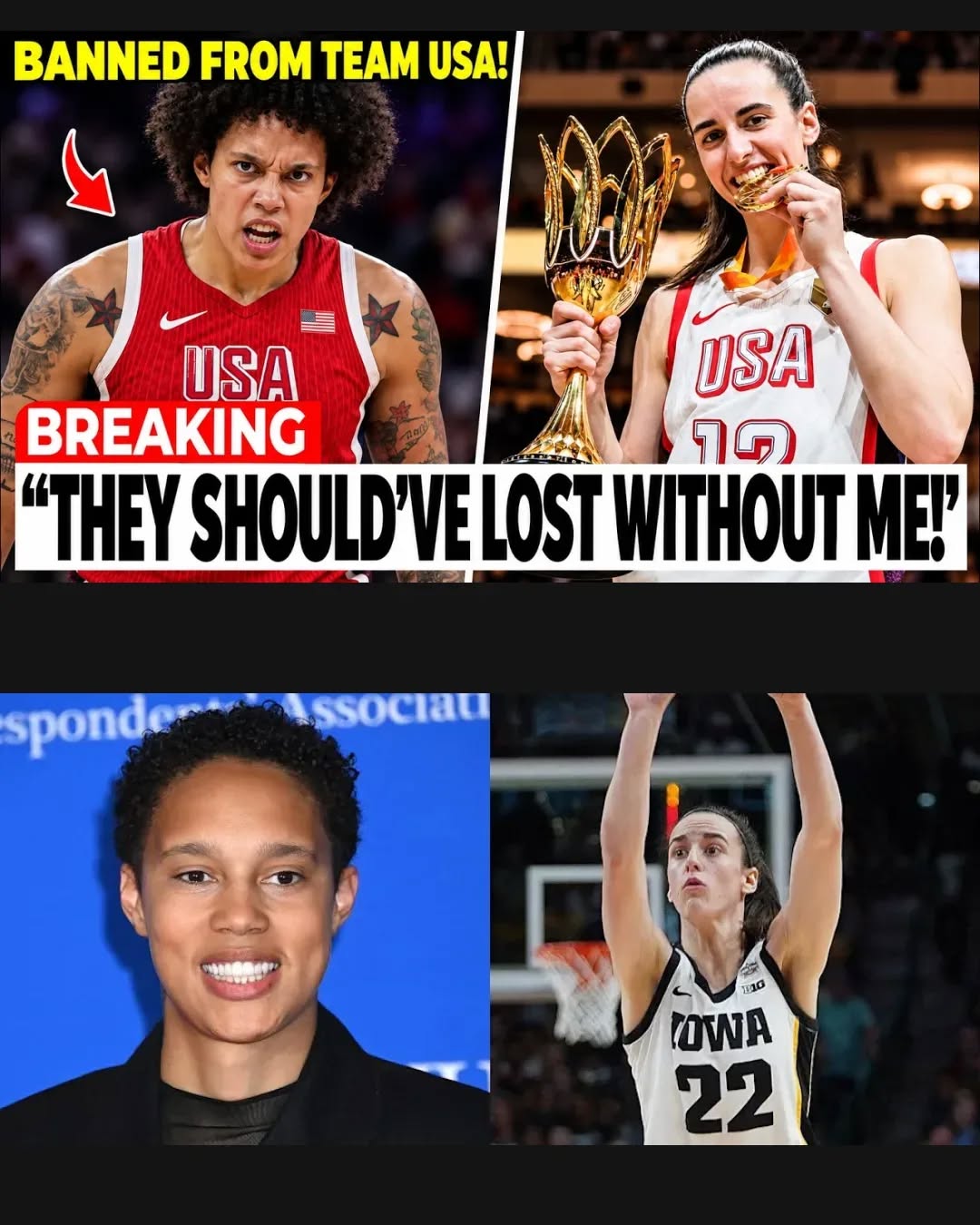

The International Olympic Committee quietly announced genetic testing for every female athlete in March 2026 heading into the 2028 games. FIA followed right behind them for the Berlin World Cup. Nobody wanted to say why out loud, but everybody in women’s basketball knew exactly what conversation this was about. Weeks later, Britney Grryer is off the Team USA roster despite being a three-time Olympic gold medalist and two-time World
Cup gold medalist. Caitlyn Clark, Angel Ree, and Paige Bukers were on it, and they just won a gold medal at the recently concluded FIA World Cup against France. Sources say Britney is throwing a fit backstage, telling anyone who will listen that the team’s dominance is somehow because of her. So, let’s talk about whether that’s a coincidence or whether the rules just caught up. Should the WNBA follow suit and ban
Grinder? Sound off in the comments below. Let’s talk about the actual policy because this is where everything starts making sense. Back in March 2026, the International Olympic Committee dropped an announcement that genetic testing would apply to every female athlete heading into the 2028 Los Angeles Games. They framed it as a fairness issue, checking biological markers like chromosomes to make sure competition
stayed level. That’s the official language. But the timing is what makes people pay attention because this landed just months before team USA finalized its World Cup roster and just weeks before Britney’s name disappeared from it completely. So what does genetic testing actually check for? It’s not some vague background check. It’s a biological screen looking at chromosomes and other markers. The International Olympic Committee waited this long
because Los Angeles 2028 planning forced the issue. Governments, athletes, and other sports bodies had been pushing for a clear standard, and the International Olympic Committee finally set one instead of leaving it to individual federations to sort out on their own. Here’s where it gets interesting. USA basketball mysteriously cut Griner from team contention despite being a three-time Olympic gold medalist and
two-time World Cup gold medalist right about the same time the new policy was announced. No injury explanation, no performance note, nothing on paper. That silence left a gap, and the timing of the International Olympic Committee’s announcement filled it before anyone in the organization said a word. FIEA didn’t wait long to follow the International Olympic Committee’s lead either. Both organizations used the same phrase about
protecting the integrity of women’s competition. Once FIA’s policy existed, it applied to every single player trying to make that World Cup roster, Grryer included, whether USA basketball wanted to say so directly or not. Now, bring in Sophie Cunningham. Weeks before any of this became official, she sat down with ESPN and said she wants to protect young girls in a locker room or young girls in sport who shouldn’t have to compete against biological men. She
called it common sense. She said she was there to extend love but also truth being honest. That interview happened before the International Olympic Committee or FIA said one word publicly which raises a real question. Did Cunningham know something was coming or did she just say what plenty of athletes were already thinking? Compare that to the WNBA which has done nothing. No testing policy, no public definition of eligibility, nothing beyond a task force
meeting that produced zero results. The International Olympic Committee moved. FIBA moved. The WNBA sat still. And that stillness looks worse every month. It continues. Commentators have pointed out the obvious question. Why would a league avoid testing unless it’s worried about what testing might show? That silence isn’t separate from the Grryer situation. It’s part of it. Every rumor about her identity that circulated for years suddenly has a policy
environment around it that didn’t exist before. The WNBA’s collective bargaining agreement technically says only women are eligible to play, but without a real definition backing that up. It’s just a sentence with no teeth behind it. Grryer’s spot on that roster stopped being something USA basketball could quietly hold on to. The policy did what no press release wanted to do directly. And once the news got out that she was
gone, Grryer didn’t handle it like someone accepting a basketball decision. She handled it like someone who felt personally erased. And that reaction is where things get messy. Sources close to the team say Grryer didn’t take the news well at all. And didn’t take it well is putting it gently. In the days after the roster dropped, people close to her describe a full tantrum. Phone calls, venting, refusing to accept that her name just wasn’t on the list anymore.
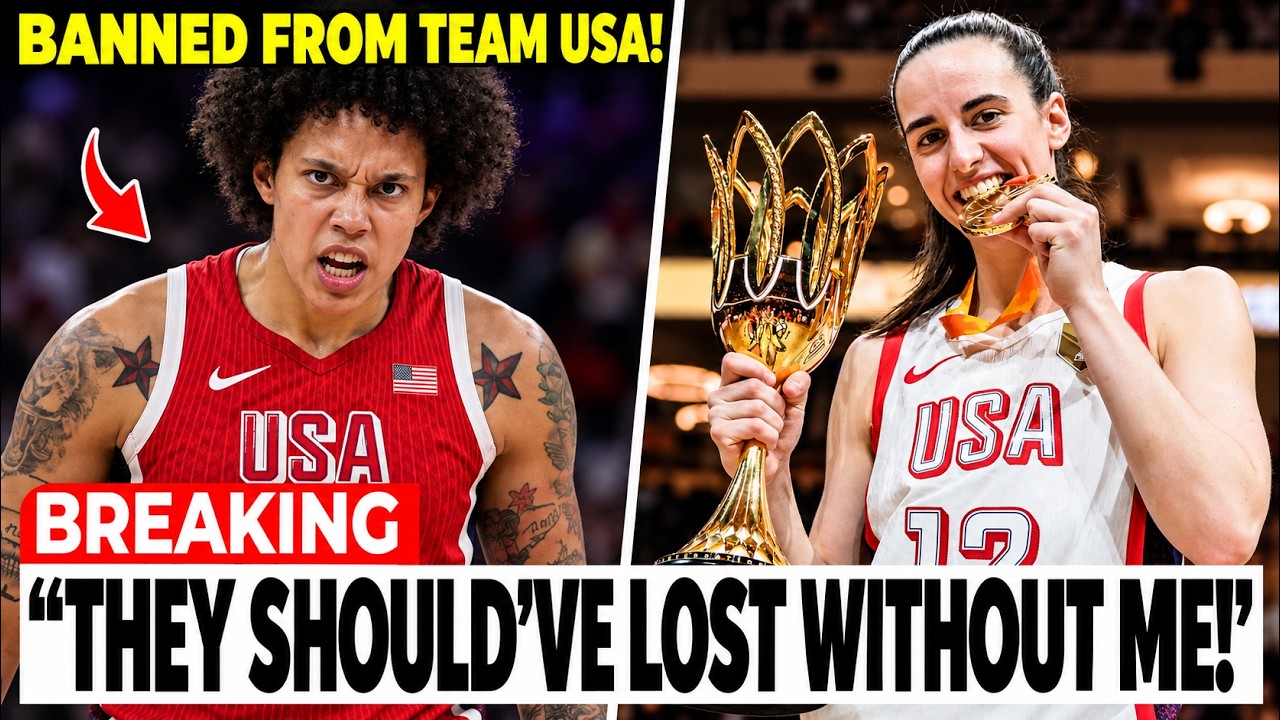
This isn’t someone stepping back quietly into a mentorship role. This is someone fighting a decision she clearly felt blindsided by. And look, you can understand some of that reaction once you see the resume. Three Olympic gold medals, two FIA World Cup golds, a WNBA championship with Phoenix back in 2014, 10 all-star selections. That’s the kind of resume that usually buys a player a roster spot for life, no questions asked. which is exactly why this cut
sent shock waves through basketball circles the moment the roster posted. USA basketball gave zero explanation for the move. No press conference, no injury note, no farewell tribute, nothing. For an organization that usually coordinates every message down to the last word, that silence stands out. And insiders say Grryer has been telling people close to her that Team USA’s dominance is partly because of her, even while she’s
sitting out entirely. That’s a strange thing to claim about a team that just won gold without you on the floor. Then there’s the Clark situation, which reportedly weighed heavier on this decision than anyone in the organization wants to admit publicly. Sources point back to a 2025 incident where Grryer was caught on camera bodychecking Clark, allegedly yelling profanity from the bench afterward. The league never addressed it directly, and Grryer never
faced real accountability for it either. That kind of pattern doesn’t just disappear. It builds a file, and eventually that file becomes the reason a front office stops answering your calls. Now look at who actually made this roster. Clark, Bukers, and Ree all made their senior national team debuts on this exact squad. The same one Grryer got removed from. That’s not a coincidence. That’s a changing of the guard happening in real time. USA
Basketball didn’t just replace one player. They rebuilt the entire identity of the team around three names built for speed and tempo instead of size and controversy. Think about what Clark’s game actually requires from the players around her. Fast ball movement, quick transition buckets, a pace that doesn’t stop to deal with distractions on the bench. A locker room built around that tempo simply doesn’t have room for a
player generating this much off-court noise, no matter how many medals hang in her closet. USA basketball had to choose between protecting a veteran’s ego and protecting the team’s rhythm. And they picked rhythm, which raises a question a lot of fans are asking out loud now. If the testing conversation is happening across the International Olympic Committee and FIA at the same time Grryer’s name disappears from the roster, doesn’t that make you look back
at every gold medal, every championship, every all-star nod a little differently? Nobody’s rewriting history yet, but the questions aren’t going away either, and USA Basketball’s silence isn’t helping her case. At the end of the day, this wasn’t about basketball skill. USA basketball chose youth, chose speed, chose clean headlines over a veteran who kept bringing controversy into a locker room that didn’t need it. That’s not cruelty. That’s just an
organization protecting its brand heading into the biggest stretch of international competition in years. But Grryer wasn’t the only one catching heat for saying the quiet part out loud. Sophie Cunningham didn’t just talk about policy in general terms. She named names. She pointed at specific situations and that decision cost her more than she probably expected. The backlash hit Cunningham fast and it hit hard. Within days of her comments going
public, she found herself getting booed in road arenas, watching her name trend for all the wrong reasons and getting labeled a bully across social media. Cunningham herself talked about it directly, saying she got a lot of negative feedback about hating trans people. And her response was simple. She never once said that. But the internet doesn’t care about nuance. It cares about a headline and hers turned into a target overnight.
Things got physical, too. A Chicago Sky player clotheslined her on the court, then posted white privilege on social media right after, and fans immediately connected that moment to everything Cunningham had said weeks earlier. Here’s what she actually said because it’s worth hearing in full instead of the shortened version people argued about online. Cunningham told ESPN she wants to protect young girls in a locker room or
young girls in sport who shouldn’t have to compete against biological men. In a press conference afterward, she doubled down, calling it common sense, saying it’s about protecting children, specifically little girls involved in that category. She tied it back to Title 9, too, pointing out that without protections for women’s sports, nobody would even be talking about women in sport at all. That’s not a complicated argument. It’s the kind of thing plenty

of parents and coaches have said quietly for years. Except Cunningham said it with her name attached and a camera pointed at her face. WNBA veterans didn’t treat it that way, though. The league office distanced itself fast with the fever putting out a statement saying, “Players are thoughtful adults with their own perspectives, which read less like support and more like a quiet step back.”
Minnesota Lynx coach Cheryl Reev wore a trans kids belong shirt during a game against the fever and everyone watching understood exactly who that message was aimed at. That’s when Steven A. Smith stepped in and he didn’t hold back. He spent 14 minutes on his show defending Cunningham, saying this isn’t about being anti- anything. It’s about being pro- girls, pro- females, pro women. He went further saying a male born a male transitioning to female
shouldn’t have the right to compete against women. And he called out Reeve directly saying she showed no regard for the league or its own sponsors. Smith’s argument kept coming back to one point. The WNBA’s own agreement says only women are eligible to play. Yet the league still won’t define what that actually means. That contradiction is exactly what fans keep pointing to. If the rule already exists on paper, why has nobody enforced it with a real test?
Klay Travis pushed this theory hard, saying the WNBA avoids genetic testing because league officials already know some players wouldn’t pass it. That’s not a small accusation. That’s a claim the league has players who wouldn’t qualify under the same standard the International Olympic Committee and FIA just adopted. And once you connect that theory to Grryer’s name, the whole conversation shifts from one player situation to a question about how many
players this might actually involve. Through all of it, Cunningham’s own teammates didn’t run from her. Aaliyah Boston and Kelsey Mitchell stayed close, showing up alongside her instead of putting distance between themselves and the noise. That kind of loyalty means something when an entire league office is trying to make you disappear quietly. Speculation has followed Griner since her college days, long before any roster
drama, long before Cunningham ever picked up a microphone. People in basketball circles have whispered about it for years, quietly. The kind of thing that never makes headlines, but never fully goes away either. So, when the International Olympic Committee dropped its testing announcement and Griner’s name vanished from the roster in the same stretch of months, a lot of fans didn’t see a new story. They saw an old one finally getting confirmed. One
detail that fed this for years goes back to her time in foreign custody. Multiple reports at the time noted she was held in a facility that housed male prisoners, not the separate women’s units used for other detained foreign nationals. Nobody in an official capacity ever explained why. And that silence did exactly what silence always does. It let people fill in the blank themselves.
Years passed and that detail kept getting brought back up every time her name trended for any reason at all. Then there’s the topless social media photos and this one spread hard. Grryer posted it and it stayed live on the platform for what some reports describe as over a 100 weeks straight. Never flagged, never removed. Platforms run obscene detection built specifically to catch a bare female chest and take it down fast. That system didn’t touch this post
for close to 2 years. Fans picked that apart immediately, asking the obvious question. If the system is trained to catch a female chest, why did it never once flag hers? That’s not a small technical glitch. That’s a system either malfunctioning constantly or reading the image as something other than what everyone assumed. Now add the leaked DNA test into the mix because this is the one that really lit the forums on fire. Within days, screenshots
claiming to show test results started circulating across social media and message boards, spreading faster than anyone could fact check them. No official lab, no confirmed source. Nobody’s name attached to verify a single detail of it. And yet it spread anyway because the timing lined up perfectly with the International Olympic Committee’s own announcement just weeks earlier. When a rumor drops right as a real policy change happens, people stop
treating it like gossip and start treating it like proof. Put those three things next to each other and you start to see why fans aren’t calling this a coincidence anymore. The men’s facility detail, the topless photos that never got flagged, and a leaked test result that showed up at the exact right moment. None of these on their own would mean much. Together, they built a pattern that a lot of people feel is impossible to ignore, especially once

the International Olympic Committee and FIA moved on testing at the exact time Grryer’s roster spot disappeared. And while all of this noise kept spreading across forums and timelines, something else was happening that barely got mentioned in the middle of it all. Team USA was on the floor game after game, quietly winning every single one of them. Team USA’s opener against China gave everyone their answer before the
tournament even got going. Clark came off the bench and put up 14 points, 11 assists, and zero turnovers in just 25 minutes, a statline that broke eight FIA World Cup records in one night. She set the mark for most assists by a USA player in a World Cup debut, beating Alyssa Thomas’ nine from 2022 and became the first player in women’s World Cup history to reach double-digit assists without a single turnover. Her plus minus hit plus 30, the best on the team,
meaning team USA outscored China by 30 points every minute she stood on the floor. The final margin was 33 points and Clark’s bench group outscored the starters 64 to30. That’s not a close game turning into a blowout. That’s a bench unit making the starting lineup look unnecessary. The group stage wasn’t all smooth sailing though. Italy nearly pulled off the upset and team USA escaped with a 55 to 52 win. The lowest scoring
output for a USA win at a World Cup since 1971. Clark barely played, logging just 18 minutes and scoring one point, while coach Cara Lawson leaned on a veteran lineup led by Chelsea Gray that shot 29% from the field. The numbers told a different story than the box score did. Clark finished at plus 6, Bukers at plus 7, and Aaliyah Boston posted an absurd plus 18, while the veteran lineup bled points and let Italy claw back from nine
down. Then came Czecha, a 105-64 win on paper, but the bench once again outproduced the starters with Buickers leading everyone at plus 1.45 per minute and Clark right behind at plus 1.0. Every close call fed the same media question. Could this team actually survive without Grryer’s size in the paint? The semi-final against Spain nearly answered that question the wrong way. Clark played under 17 minutes and
still finished at plus 16 with Boston leading the team at plus 21. While veteran starters Copper, Gray, and Young combined for barely a positive mark despite playing triple the minutes. Spain got held to just eight points in the fourth quarter once the young core finally took over the pace. Boston said it herself after the game, telling reporters the team needed to play fast and play at their own speed, which was about as direct a shot at the slow it
down veteran approach as you’ll hear from a player still on the team. Then the final against France showed up and the first quarter had fans nervous fast. Team USA fell behind early. The veteran heavy starters struggling to find any rhythm against a disciplined French defense that packed the paint and dared anyone to beat them from outside. But once Clark and the young core took the floor, the whole game flipped. Her pace pushed the tempo. Her passing
opened lanes for Nafisa Collier, Angel Reese, and Bukers. And the second half turned into exactly the track meet team USA wanted from the opening tip. Ree finished plays off Clark’s passes in transition all tournament long, saying afterward that Clark just knows her spots on the floor. Collier gave the group another scoring option who could match that pace instead of slowing it down. Something the veteran group never managed to do across the
whole tournament. By the time the final buzzer sounded, team USA had pulled away for good. And gold medal number four for this new look roster was locked in. Clark, Ree, and Buickers stood together on that podium. The exact group that replaced Grryer on paper months earlier, now standing there with medals around their necks. Nobody needed a press conference to explain what happened. The scoreboard already said it. That gold medal didn’t just win a tournament. It
answered the question everyone kept dancing around for months without saying it straight to Grryer’s face. Cunningham spoke up first back when saying it cost her followers and got her booed on the road. The policy caught up second with the International Olympic Committee and FIA both rolling out testing right as Grryer’s name disappeared from the roster. Team USA’s play settled the rest four golds deep with a roster that never needed her. Should the WNBA
follow suit and ban Grinder? Sound off in the comments below. And don’t forget to like, subscribe, and turn on all notifications as we’re bringing you all the action and top stories. Click the video on the screen and we’ll see you in the next one.