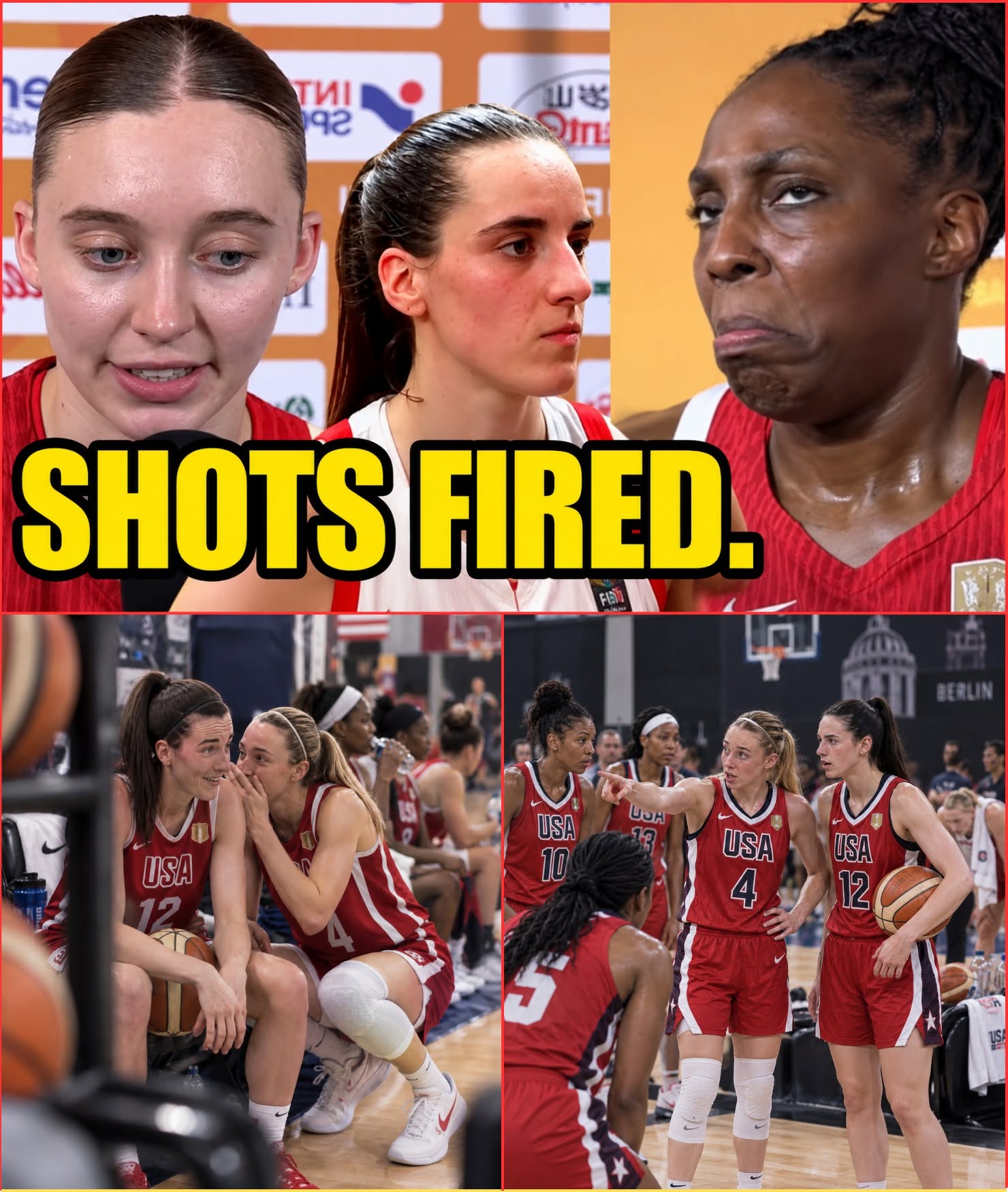

Paige Bueckers Says Team USA Needs More Movement as Caitlin Clark and Young USA Group Change the Tempo
Team USA won the game.
But Paige Bueckers wasn’t interested in pretending everything looked right.
After a surprisingly uncomfortable night against Italy, the young guard was asked about an American half-court offense that had struggled to find rhythm. Her answer was short, straightforward and potentially revealing.
“I think just getting more player movement, ball movement.”
Those words immediately stood out because they described exactly what frustrated viewers had been watching for stretches of the game.
Too much standing.
Too much isolation.
Not enough cutting.
Not enough pace.
And perhaps most interestingly, some of Team USA’s most energetic stretches appeared when younger players such as Bueckers, Caitlin Clark, Angel Reese and Aliyah Boston were involved.
Team USA escaped with the result it wanted.
The bigger question is whether it also discovered something about the style it needs going forward.
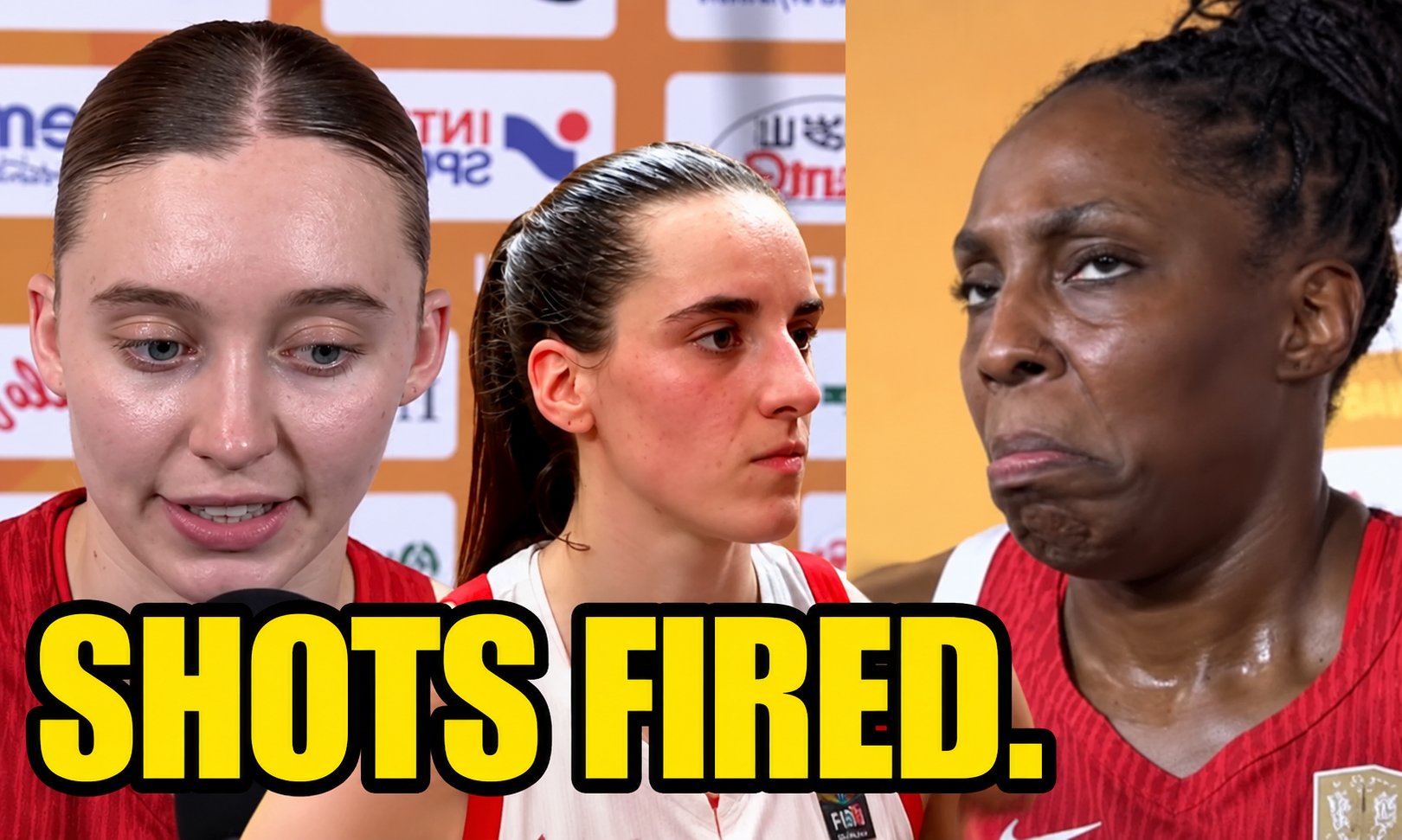
Paige Didn’t Attack The Veterans — But Her Message Was Clear
First, an important distinction.
Bueckers did not publicly accuse Team USA’s veterans of being washed, old or incapable of keeping pace with Clark and the younger players. Those were interpretations made by commentators reacting to the game.
What Bueckers actually discussed was basketball.
Movement.
Spacing.
Changing sides of the floor.
Getting into the middle of Italy’s zone.
Cutting.
Those may sound like ordinary postgame observations, but they addressed the central problem Team USA had been fighting.
Italy wanted to slow the Americans down.
And for stretches, it worked.
When possessions became stagnant, Team USA’s overwhelming collection of individual talent didn’t look nearly as overwhelming.
The ball stayed on one side too long. Players sometimes watched instead of cutting. Individual creators were forced to manufacture difficult opportunities against a defense that had time to organize itself.
Bueckers recognized the issue.
“They played a zone, so they try to slow us down that way,” she explained.
Her solution?
Make the defense move.
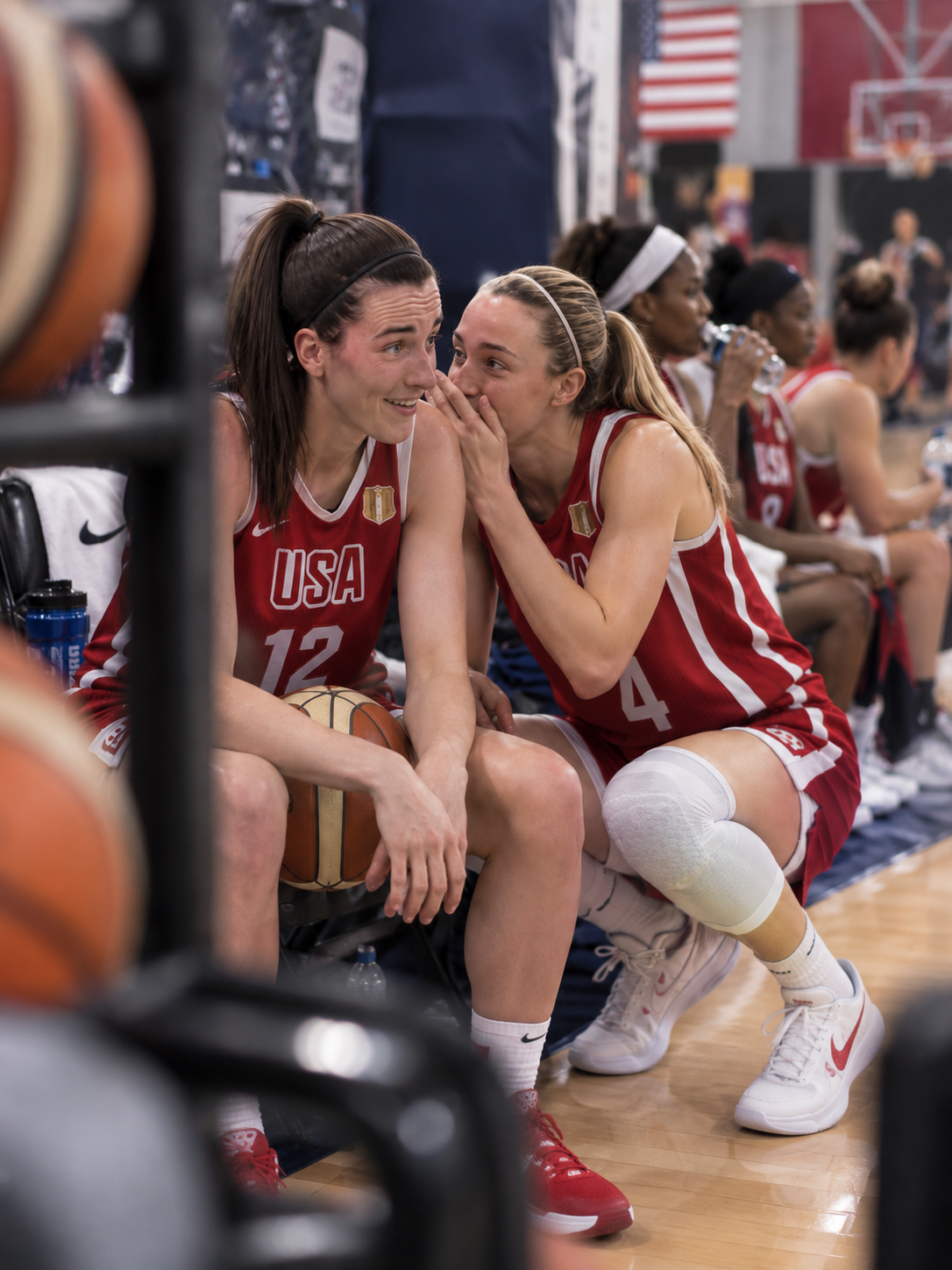
That’s Where Caitlin Clark Changes The Equation
This is what makes Clark so intriguing within this roster.
Clark naturally wants to accelerate basketball.
She looks ahead.
She pushes after rebounds.
She searches for transition opportunities before defenses can establish themselves.
And when she has the ball in the half court, her passing range can punish defenders who become too comfortable loading one side.
Put her beside other energetic players and the game can suddenly feel different.
Bueckers is comfortable attacking quickly.
Reese runs the floor and creates extra possessions.
Boston can establish herself inside while also functioning as a screen-and-roll partner.
Add another athletic perimeter threat such as Rhyne Howard and suddenly Team USA has a lineup capable of making opponents process multiple actions at speed.
That’s considerably different from possessions where the offense becomes a sequence of one-on-one attacks.
Neither approach is automatically wrong.
But against a defense deliberately trying to reduce pace, movement becomes essential.
And Team USA learned that lesson the uncomfortable way.
The Veterans Still Bring Something The Young Group Doesn’t
It’s tempting after a performance like this to declare that the younger players should simply take over.
That would be an overreaction.
Breanna Stewart, Napheesa Collier, Chelsea Gray, Jackie Young and Kahleah Copper have accumulated experience that matters enormously in international competition.
Gray’s control of tempo can become invaluable late in games.
Stewart’s versatility gives Team USA options at both ends.
Collier can impact possessions without needing the offense built entirely around her.
Young brings physicality and two-way value.
Copper can attack defenses aggressively.
The problem isn’t that veteran players suddenly forgot how to play basketball.
It’s figuring out how their strengths coexist with a younger group that often seems most dangerous when the game becomes fast and unpredictable.
That is a coaching puzzle.
And it may become Kara Lawson’s biggest challenge.
Does Team USA Need More Defined Roles?
Chelsea Gray was asked a fascinating question afterward.
Would Team USA benefit from having more clearly defined roles?
Her answer emphasized the collective mission.
“Everybody’s coming here, you know, for a purpose, and that’s to win gold,” Gray said. “Whatever that role is at that day is to get it done.”
From a team-first perspective, that makes perfect sense.
National-team basketball demands sacrifice. Players who normally take 15 shots may receive five. A starter for one lineup could become a reserve in another.
But there’s another side to the argument.
Too much flexibility can create uncertainty.
Who initiates the offense?
Who is the primary creator?
Who gets the ball when a possession breaks down?
Which combinations are supposed to increase tempo?
Which group closes a tight game?
Those questions become increasingly important as the competition improves.
Against Italy, Team USA could survive stretches of offensive uncertainty.
Against the world’s strongest opponents, the margin could become much smaller.
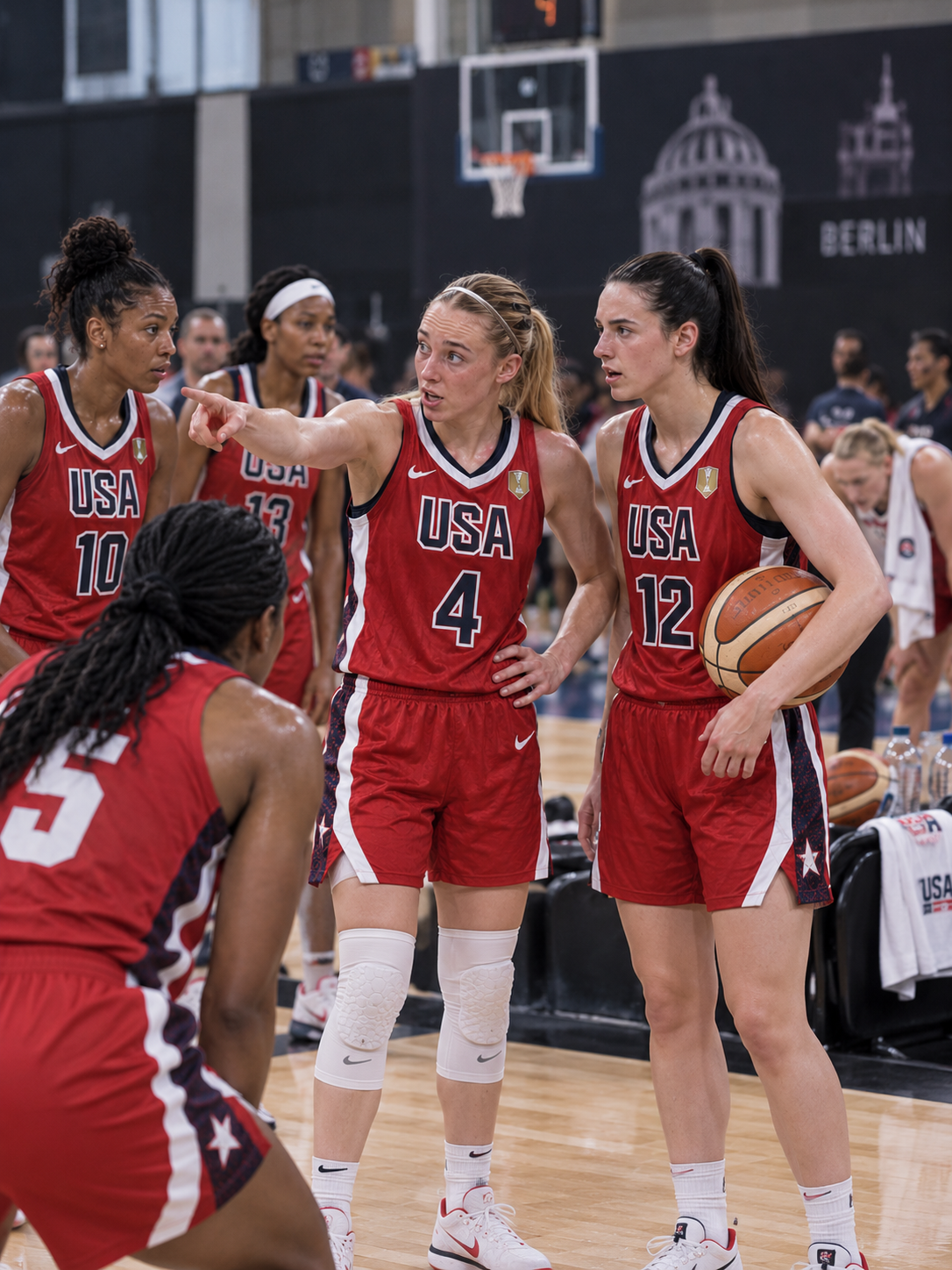
Bueckers Saw Value In Being Tested
Perhaps the most encouraging part of Bueckers’ postgame comments was that she didn’t sound panicked.
Quite the opposite.
She viewed the difficult game as something Team USA might ultimately benefit from.
The group, she noted, had only been together for about five days.
“To be challenged like this early for our group, I think it’s great for us in the long run,” Bueckers said.
That’s easy to overlook.
These players don’t spend an entire WNBA season developing chemistry together.
They’re being asked to compress months of learning into days.
Timing won’t always be perfect.
Roles won’t immediately feel natural.
Players will occasionally occupy the same space or miss cuts because they haven’t yet learned each other’s tendencies.
That doesn’t mean the experiment is failing.
It means Team USA is still becoming a team.
And Clark Could Become Central To Its Identity
This is where the next few games become fascinating.
Team USA has enough talent to win in several different ways.
But eventually every great team develops an identity.
Perhaps this group becomes a veteran-controlled half-court machine.
Perhaps it leans into size and defense.
Or perhaps Lawson realizes that the most frightening version of this roster is the one that unleashes Clark and Bueckers to increase the speed of the game.
Imagine the pressure that creates.
Clark advances the ball before the defense is ready.
Bueckers attacks the next opening.
Reese crashes behind the play.
Boston runs directly toward the rim.
Defenders don’t have time to build a wall because Team USA is already forcing the next decision.
Even missed shots become dangerous because athletic rebounders are arriving against a scrambling defense.
That kind of basketball doesn’t simply produce points.
It creates exhaustion.
Team USA Won — But Italy May Have Given Them Something More Valuable
The easiest reaction would be to focus entirely on what went wrong.
Bueckers chose a more useful perspective.
There were missed layups and missed free throws. There were good opportunities that simply didn’t fall.
But there were also structural issues that can be improved.
More movement.
More cutting.
More side-to-side action.
More clarity.
Those aren’t impossible problems to solve.
In fact, Team USA may have needed a game like this.
Blowing out every opponent can hide weaknesses. A close, uncomfortable performance exposes them.
Italy forced Team USA to confront what happens when the pace disappears and its half-court offense becomes predictable.
Now Lawson has a decision to make.
Does she maintain the current balance and trust that the veterans will find their rhythm?
Or does the energy provided by Clark, Bueckers and the younger group become increasingly difficult to keep on the bench?
Bueckers never publicly demanded that Team USA replace its veterans.
She didn’t need to.
Her basketball diagnosis was much simpler:
Move the players.
Move the ball.
Make the defense work.
And after watching how dramatically Team USA’s energy could change when its younger players entered the action, those words may carry considerably more weight than they first appeared to.