
Pew Research Reshares Finding That 73% of Americans Are Uncomfortable With Trans Athletes in Opposite-Sex Categories
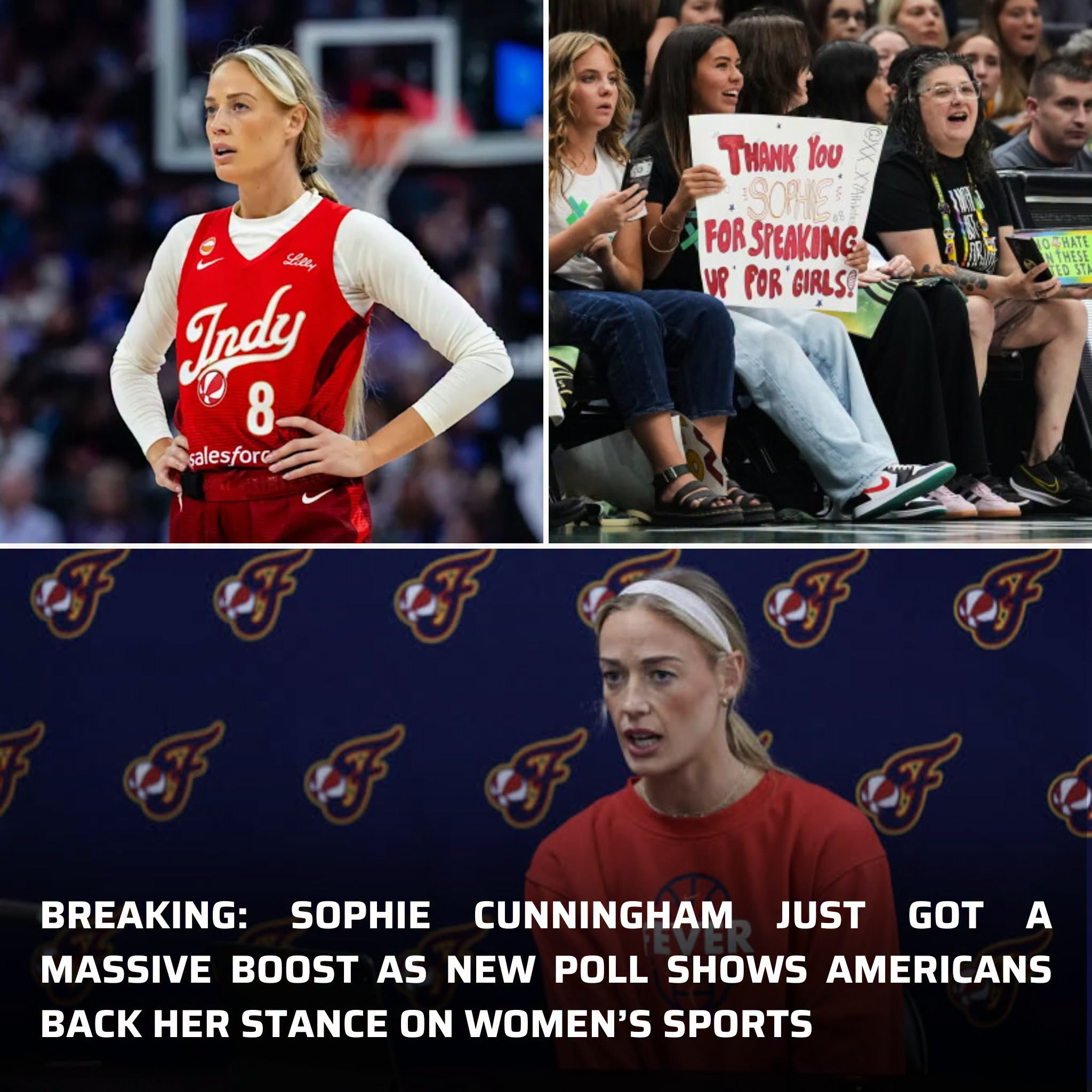
Pew Research Center has recirculated results from a 2025 survey showing that 73 per cent of Americans said they are uncomfortable with transgender athletes competing on sports teams that do not match their birth sex. The findings have been widely shared again on X as debate continues around Indiana Fever guard Sophie Cunningham’s public comments on the protection of women’s sports and the participation of transgender players in the WNBA.
The poll does not resolve the ethical or policy arguments on either side, but it supplies a clear snapshot of majority public sentiment at the time the data were collected. In the current climate, where Cunningham’s remarks have split fan opinion between those prioritising sex-based categories and those prioritising inclusion, the 73 per cent figure has been seized upon by supporters of her stance as evidence that her position aligns with broader American opinion. Critics of the poll’s framing or relevance continue to argue that comfort levels should not dictate eligibility rules and that minority rights are not settled by majority preference.
A League Caught in a Wider Argument
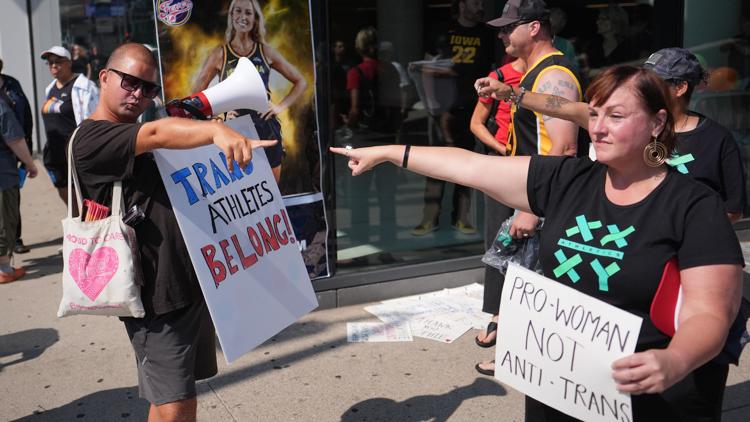
The WNBA has found itself at the centre of a national conversation that extends far beyond basketball. Cunningham’s insistence that women’s categories should protect biological female athletes has drawn strong backing from conservative media and activists, while drawing equally strong criticism from those who view her comments as harmful to transgender people. Demonstrations outside arenas, heated social-media exchanges and even on-court friction have followed. League officials have expressed concern that external political actors are using the WNBA to prosecute cultural battles, sometimes with little prior engagement in the sport itself.
Against that backdrop, the recirculation of the Pew numbers functions as a data point rather than a conclusion. Polling can illuminate public attitude; it cannot design fair eligibility criteria, resolve safety questions in contact sports, or adjudicate competing claims about identity and fairness. Those tasks remain with governing bodies, legislators and the leagues themselves. What the 73 per cent figure does achieve is to complicate any claim that discomfort with transgender inclusion in female categories is a fringe sentiment. At least as of the 2025 survey, it was a majority view.
Cunningham’s On-Court and Locker-Room Focus
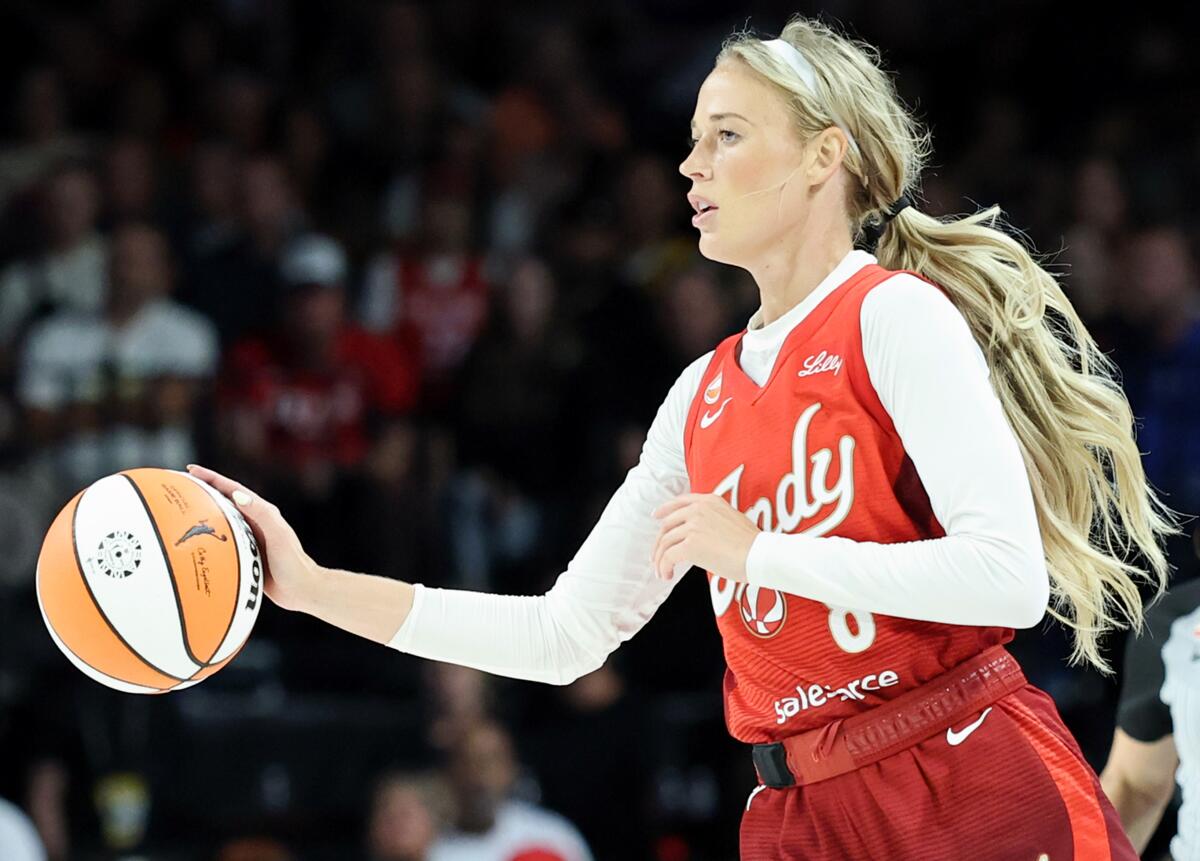
While the cultural argument swirls, Cunningham has continued to play and to address team matters in more conventional sporting terms. After a notable altercation with Chicago Sky’s DiJonai Carrington that drew widespread attention, she used a post-game session to defend the Fever’s internal culture and head coach Stephanie White. “Our locker room in there is tight, we have each other’s backs,” she said. “Coach loves us. She didn’t see the clip at the end of the day; she didn’t see the clip… Me and Steph are great, Steph is great with all of us, so, its really the outside noise that’s trying to distract us.”
The comments were an attempt to draw a boundary between external controversy and the team’s daily work. Cunningham and team-mate Caitlin Clark have both absorbed heavy criticism this season from different directions; the Fever as a group have operated under unusual scrutiny. By insisting that relationships inside the locker room remain solid, Cunningham sought to deny critics the additional claim that the team itself was fracturing.
She has also produced on-court contributions that keep the focus, at least momentarily, on basketball. Against the New York Liberty she scored 12 points in 22 minutes, a reminder that her professional value to Indiana is not solely a function of her media profile. For a player in the middle of a polarising debate, efficient minutes and visible team loyalty are among the few responses that do not immediately feed the political cycle.
Two Camps, One Poll
The division among fans is now familiar. One camp frames the issue as the defence of women’s rights to fair competition and privacy in changing spaces. The other frames it as a test of inclusivity and the acceptance of transgender athletes in the categories that match their gender identity. Each side has incentives to treat the Pew result selectively—either as vindication or as evidence of widespread prejudice that must be overcome. The research organisation’s decision to reshare the finding simply returns the data to circulation at a moment when the WNBA story has renewed demand for numbers.
It is worth noting the precise wording recirculated: discomfort with transgender athletes on teams “different from their birth sex.” Poll results are sensitive to phrasing. Different questions—about elite versus youth sport, about contact versus non-contact disciplines, about hormone requirements—can produce different distributions. The 73 per cent figure captures one question at one point in time. It does not capture every nuance of public opinion, nor does it freeze opinion permanently. It does, however, indicate that policies moving toward open inclusion in female categories have been operating against a substantial current of public unease.
League Leadership and the Cost of Attention
Commissioner Cathy Engelbert and other league voices have repeatedly signalled frustration that the WNBA is being used as a proxy battlefield. Rising attendance, expanded media deals and the star power of players such as Clark have made the league more visible than at any point in its history. That visibility attracts not only new fans but also activists and commentators whose primary interest is the cultural fight rather than the standings. Cunningham’s prominence has accelerated the effect. Every flagrant foul, every post-game quote and every arena protest risks being absorbed into the larger narrative.
Her insistence that the Fever locker room remains united is therefore strategic as well as sincere. If the team can maintain internal cohesion, it limits the ability of outside noise to define the organisation. If performance holds, the basketball itself becomes a competing storyline. Neither outcome ends the eligibility debate, but both can prevent the debate from becoming the only story attached to the franchise.
What the Numbers Do Not Settle
Public-opinion majorities have never been the sole basis for sports regulation. Safety data, competitive-advantage studies, legal judgments and international federation rules all play roles. Conversely, governing bodies that ignore sustained majority discomfort risk legitimacy crises among fans and sponsors. The Pew finding sits in the middle of that tension. It strengthens the hand of those arguing for sex-based categories; it does not by itself write the rulebook.
For Cunningham the practical reality is simpler. She has stated her view, absorbed the consequences in arenas and online, and continued to play. She has defended her coach and her team-mates against claims of internal division. She has posted modest scoring nights that keep her involved in games. Around her, a research organisation has reminded the country that most respondents in a national survey shared at least the core discomfort she has articulated. The coincidence of those facts ensures the argument will not quieten soon.

A Debate That Outlasts Any Single Season
The WNBA’s season will end; the eligibility question will not. Polling will be updated; the next survey may show movement in either direction. What remains constant is the difficulty of reconciling inclusion claims with the biomechanical and competitive realities that led sports to create female categories in the first place. Sophie Cunningham did not create that difficulty. She has become one of its most visible current expressions. Pew’s reshared 73 per cent figure ensures that expressions on her side of the argument cannot be dismissed as marginal. How leagues, lawmakers and fans weigh that figure against competing principles will shape the next phase of a conflict that has already moved from social media into the stands and onto the court.