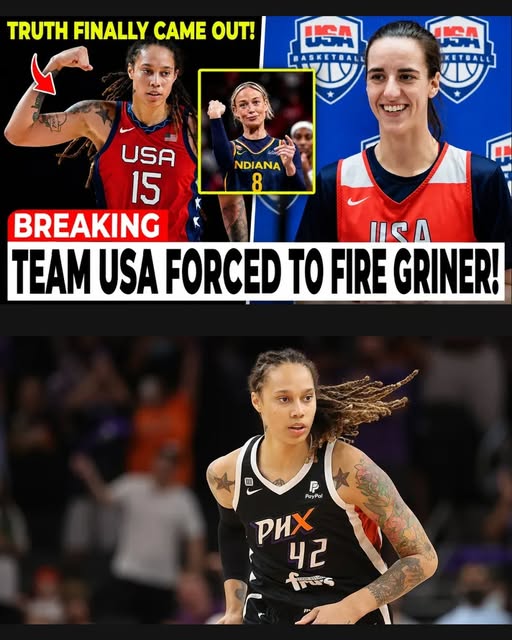

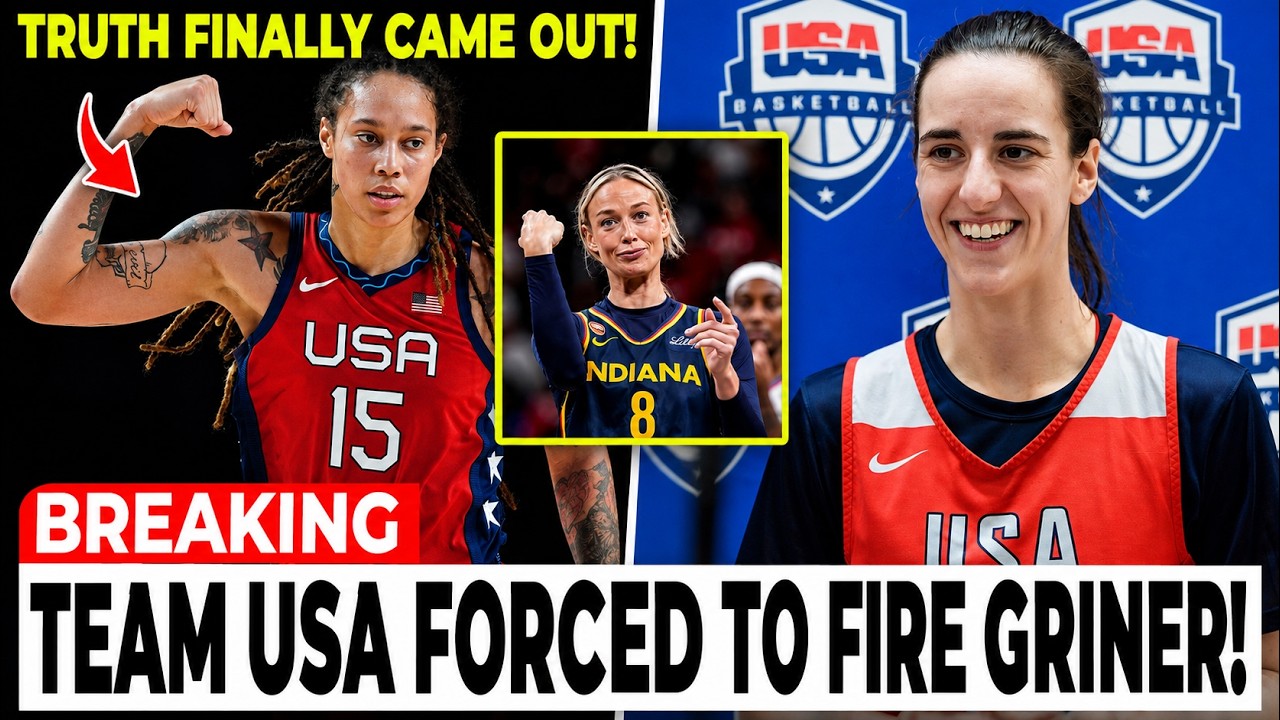
Brittany Griner just got cut from Team USA, gold medalist, WNBA champ, multiple all-star appearances, and none of it mattered. She’s off the 2026 World Cup roster, and Caitlyn Clark, Paige Buckers, and Angel Reese are taking over on the senior national team. So, what actually happened here?
Because USA basketball doesn’t just drop a two-time Olympic gold medalist for no reason. The reports coming out about why are wilder than anything Griners did on the court, and it makes Sophie Cunningham look like she saw all of this coming. Did Team USA make the right decision of firing her?
Let me know down in the comments below. Let’s talk about what actually happened here, because this isn’t a small snub. Britney Grryer won Olympic gold in Tokyo, won it again in Paris in 2024, picked up a WNBA championship with the Phoenix Mercury back in 2014, and stacked up all-star selections over a decade in the league.
This is a player who’s been one of the leaders of USA basketball’s front court for years. When she walked into an arena, opposing coaches game planned around her. So, when we talk about her getting cut, we’re not talking about some bench player who ran out of chances.
We’re talking about somebody who was supposed to be a lock for 2026 and then USA Basketball posted the roster for the 2026 World Cup and her name wasn’t on it. No press conference explaining it. No long farewell tribute, just gone.
Picture this. You’ve spent years building a resume that most players can only dream about. And then one roster announcement wipes it out like it never happened.
That’s exactly what this looked like when the list went public. At the same time, Caitlyn Clark is making her senior national team debut. Paige Buers is making hers, too.
So is Angel Ree. Three of the biggest names in the sport right now. All stepping onto Team USA at the same time Grryer steps off it.
That’s not a coincidence. And USA basketball can spin it as roster rotation or load management. That’s a changing of the guard happening in one single announcement.
And everybody watching knew it the second the names dropped. Now, here’s where it gets interesting because Grryer did not take this well at all. Reports describe her reaction as a full tantrum, refusing to accept the decision, pushing back behind the scenes instead of stepping aside with any grace.
This isn’t somebody who read the writing on the wall and quietly transitioned into a mentorship role. This is somebody who fought the decision, which tells you she wasn’t expecting it and definitely didn’t agree with the reasoning behind it. So, let’s ask the obvious question.
USA basketball doesn’t cut a two-time gold medalist for no reason. Programs like this protect their stars. They build storylines around them.
They don’t just erase a name people recognize on site unless something forced their hand. performance wasn’t the issue. Grryer was still productive, still a name that mattered on paper.
So, if it wasn’t her play on the court, what was it? That’s where things get messy because two things keep getting brought up whenever this decision comes up in conversation. One is a string of DNA testing whispers that have followed Grinder for years now, the kind of rumor that usually gets laughed off until enough people start repeating it.
The other is an incident with Caitlyn Clark that a lot of fans haven’t forgotten, and we’re going to get into exactly what happened there. Insiders keep pointing at something bigger than stats or roster fit, something tied to Grryer’s personal circumstance rather than anything that happened on the court. And that’s not a decision USA basketball made overnight.
Something built up to this point. And it didn’t start with the roster announcement. It started months earlier when one player on a completely different team stood in front of cameras and said something nobody else in the league wanted to say out loud.
That player was Sophie Cunningham. And what she said back then is looking a lot different now. Months before that roster dropped, one player already stood in front of cameras and said, “The thing everyone else in the league was too scared to touch.
” Sophie Cunningham sat down for an ESPN interview and talked about protecting girls and women in sports, specifically about keeping biological men out of women’s competition. No hedging, no dodging the question, just straight talk about something most players in the WNBA won’t go near with a 10-ft pole. And the way she framed it wasn’t angry or political, at least not on her end.
She called it common sense. She called it love with truth. her words, not some talking point handed to her by a publicist.
Cunningham wasn’t screaming into a microphone or picking a fight. She was just saying what a lot of parents, coaches, and fans already believed, but wouldn’t say out loud because they knew what would happen the second they did. And what happened next proved them right.
The backlash hit fast with plenty of critics in sports media calling her comments controversial, calling them politically charged, acting like she’d said something outrageous instead of something millions of people agree with. Reporters kept bringing it up, expecting her to walk it back or soften it or issue some kind of apology through her agent. That’s usually how this goes.
athlete says something honest, gets hammered for three days straight, then quietly clarifies their statement until it means nothing at all. Cunningham didn’t play that game. She kept repeating the same stance at press events, didn’t flinch, didn’t rephrase it into something safer.
If anything, she got more direct every time somebody pushed back on her, which is not what you’d expect from a role player getting hit with that much heat from national media. Most players fold under that kind of pressure. She just kept talking and then the response got bigger than the WNBA.
The White House weighed in and several government figures came out publicly siding with her position, turning a basketball interview into a story that jumped way outside the sports section. That’s not normal for a WNBA role players press comments. That’s the kind of reaction you get when you accidentally say something that touches a nerve way bigger than basketball.
something people across the entire country have been arguing about for years already. Steven A. Smith jumped into it, too.
And he didn’t just defend Cunningham. He went after league leadership directly. He called out Link’s head coach, Cheryl Reev, by name, questioning why the people running these teams weren’t backing up a player, saying something that obviously reasonable.
That’s Steven A. Smith, one of the loudest voices in sports media, basically asking why the WNBA’s own coaches were more comfortable staying quiet than standing next to Cunningham. And that contrast is what made the whole thing stick.
Cunningham stayed calm through all of it, repeating the same simple point over and over without raising her voice. Meanwhile, parts of the league got loud and defensive, acting like she’d committed some kind of crime just by answering a question honestly. When one side is steady and the other side is scrambling, people notice which one actually sounds like they’re telling the truth.
Here’s what a lot of people missed at the time. Cunningham wasn’t talking about Grryer specifically when she said any of this. She was calling out a pattern, a policy blind spot the league refused to address no matter how many times it came up.
But patterns don’t stay nameless forever. And this one traces straight back to a player people had been whispering about for years, long before Cunningham ever sat down for that interview. There’s a document floating around online right now.
And people are saying it answers the one question the WNBA never wanted anyone to ask. It’s spreading fast, showing up on forums, getting screenshotted and reposted. And every time somebody tries to debunk it, three more accounts pop up sharing it again.
That’s the internet for you. But it’s also exactly the kind of thing that doesn’t spread this hard unless people already had questions sitting in the back of their minds for years. And that’s the part people forget.
This didn’t start last week. Speculation about Grryer’s identity has followed her since college. Long before any of this roster drama, long before Cunningham ever picked up a microphone.
Fans whispered about it in comment sections. Message boards had entire threads dedicated to it. and every couple years it resurfaces when something new gives people a reason to bring it back up.
This time the reason is bigger than a random internet rumor. The specific claims making the rounds now include an alleged leaked DNA test supposedly showing results that don’t match what the public has always assumed. On top of that, there are reports tied to her detention in foreign soil, claims that she was held in a men’s prison during that time, which a lot of people say raises more questions than it answers.
The claims keep circulating anyway, picking up more shares every single day. Then there’s the topless photos that resurfaced around the same time, images that had been sitting online for years without anyone batting an eye. Suddenly, people are looking at them differently, asking why moments like that never triggered the kind of scrutiny other athletes get slapped with over way smaller things.

That double standard is exactly what’s fueling a lot of this conversation online right now. None of this is proven. Let’s be clear about that because it matters.
No court document, no official statement, no lab report with a signature on it. But that hasn’t slowed anything down. And if anything, the lack of an official denial is making people dig even harder because silence reads as suspicious when the stakes are this high.
And that silence is exactly what’s fueling the bigger theory going around sports media right now. Some commentators are pushing the idea that the WNBA avoids DNA testing on purpose, not just because of Grryer, but because she might not be the only case they’d rather not open up. Once you follow that logic, the whole conversation shifts from one player to an entire policy the league has never wanted to touch.
And notice the timing here because this theory picked up serious steam right as Cunningham’s comments were going viral. The two stories fed each other. Cunningham’s interview got people talking about fairness in women’s sports.
And that conversation pointed straight back at the one case fans had already been whispering about for years. Compare that to how other sports handle this. The NCAA has testing standards.
The Olympic Committee has testing standards built after years of cases that force them to create clear rules. The WNBA has nothing close to that. No public policy, no explanation, just silence every time the topic comes up in a press conference.
Whether any of this gets proven or not, the pressure on the league right now is impossible to ignore. And that pressure is exactly what made Griner’s spot on that 2026 roster impossible for USA basketball to defend. After months of saying it in general terms, Cunningham stopped hinting and started naming the actual policy she wanted.
No more talk about protecting the game in the abstract. She stood up and called for an outright ban on men competing in women’s sports. Full stop.
No exceptions carved out for anybody currently playing. Picture this. a sitting WNBA player in the middle of her own season, calling for a rule that would directly affect players in her own league.
That’s not a safe move career-wise. Cunningham talked about protecting girls in locker rooms, protecting them on the court, framing the whole thing as urgent instead of some issue that could wait for a committee meeting 5 years from now. Her point was simple.
If you wait until it’s already a crisis, you’ve waited too long. And the people who get hurt are the young girls coming up through the system right now, not the grown adults arguing about it on television. And the response this time was bigger than anything she got after the ESPN interview.
Fans flooded her replies with support. Former athletes came out backing her position publicly, saying what she said out loud is what half the locker rooms in women’s sports have said quietly for years. Commentators started calling her brave, not reckless, not controversial, brave, which is a different word than what they used the first time she brought this up months earlier.
Of course, the critics didn’t disappear. Some pushed back hard, saying this whole conversation is a distraction from real problems in the league, things like pay equity or travel conditions or media coverage. That’s a fair conversation to have on its own, but it doesn’t erase the fact that fans kept connecting these dots, whether critics liked it or not.
And here’s what changed this time around. When Cunningham talked about this the first time, people treated it like an abstract policy debate. This time, comparisons went straight to Grinder specifically out loud, on air, in comment sections everywhere.
Nobody needed it spelled out. The timing lined up too perfectly with everything already swirling around the DNA rumors and the leaked test claims. So when Cunningham talked about banning men from women’s sports, people didn’t hear a hypothetical.
They heard a name. Sports media personalities ran with it fast. What used to be a rumor floating around fan forums turned into an actual demand from people with real platforms calling for the WNBA to adopt testing standards similar to what the Olympics and the NCAA already use.
That’s a real shift. A policy request with actual weight behind it, not just internet speculation buried in a comment section somewhere nobody official would ever read. And fans keep asking the same question over and over now, repeating it across every platform.

If there’s nothing to hide, why won’t the league just run the test and clear it up for good? That question doesn’t go away just because nobody in league leadership wants to answer it. Every week, it stays unanswered.
more people assume the silence means something. What started as a rumor a handful of people whispered about online turned into a demand the league can’t just brush off anymore. Cunningham didn’t create the suspicion.
She just said out loud what a lot of people were already thinking. And that’s exactly why it landed so hard this time. And once people started looking at Grryer through this lens, they didn’t stop at the DNA questions.
They went back and started re-watching old game film, specifically every physical run-in between Grryer and Caitlyn Clark over the past three seasons, and suddenly none of it looked like normal basketball anymore. Go back and watch the tape from the last three seasons, and the pattern was sitting right there in plain sight the whole time. Everybody just looked away because it was easier to call it physical basketball than to ask why one player kept getting singled out for it over and over again.
Rewind to the 2024 season when Grryer poked Clark in the eye during a game. A moment that got brushed off as an accident by most of the media covering it at the time. Then came the complaints.
Grryer went on record talking about how the crowds Clark brought into arenas were too big, too loud, too distracting for her to focus on playing basketball. Think about that for a second. Clark was selling out arenas the WNBA hadn’t filled in years, bringing in fans who’d never watched a possession of women’s basketball in their life.
And Grryer’s response wasn’t gratitude, it was annoyance. Instead of crediting Clark for growing a league that badly needed the attention, Grryer framed her popularity as a problem, like the extra ticket sales and TV ratings were some kind of inconvenience getting in the way of the actual game. That’s a strange complaint to make about the player single-handedly moving the needle for a league that spent years fighting for relevance.
Then 2025 rolls around and the Indiana Fever face off against the Atlanta Dream. Grryer’s old team before she left for Phoenix. Cameras caught a clean body check on Clark during that game.
The kind of contact that gets a flag thrown immediately when it happens to almost anybody else on the floor. Grryer also got caught yelling profanity from the bench loud enough for microphones to pick it up. And officials in real time did nothing about any of it.
No foul, no technical, no postgame find that anybody heard about. And it didn’t stop there. Game after game, the body checks kept happening.
The same kind of contact, the same lack of a whistle from referees standing right there watching it unfold. If this was a one-time thing, you could call it a bad no call and move on. But when it repeats itself over multiple games across multiple seasons, that’s not an officiating mistake anymore.
That’s a pattern refs either can’t see or won’t call. Compare that to how fast other players get flagged for way less contact against Clark. A light bump draws a whistle from three different games this season alone.
Plenty of them turning into technical fouls or even ejections depending on how hard the hit lands. So, why does Grryer keep getting a pass on contact that looks worse on camera than half the fouls that get called against everybody else on the floor? That’s the question fans keep asking now, and it’s not a small one.
Was this ever just physical basketball, hard fouls in a physical league, or was something else going on underneath all of it? Because once you line up the eye poke, the crowd complaints, the body check, the bench profanity, and put them right next to everything coming out about Grryer’s identity, the two threads stop looking separate. They start looking connected, like pieces of the same story that only make sense once you look at all of it together instead of one incident at a time.
And that’s exactly why people are going back through Grryer’s entire track record right now, game by game, incident by incident, looking at every accomplishment and every headline through a completely different lens than the one everybody used the first time around. Grryer’s name coming off that roster was never about one bad game or one bad call from a ref. It’s about years of the league dodging a question fans kept asking louder and louder.
Cunningham said the hard part out loud months ago back when people called it controversial. Now it just looks like she saw this coming before anybody else did. In 2026, Clark, Beckers, and Ree pull on Team USA jerseys for the first time.
Did Team USA make the right decision of firing her? Let me know down in the comments below. And don’t forget to like, subscribe, and turn on all notifications as we’re bringing you all the action and top stories.
Click the video on the screen, and we’ll see you in the next one.