The final score told the story of a difficult night for the Indiana Fever: Minnesota Lynx 86, Indiana Fever 66.
Twenty points separated the two teams when the night was over, but in this dramatized postgame scenario, the moment that captured the most attention came after the basketball had stopped.
It came when Caitlin Clark stepped in front of the cameras.
There was no celebration waiting for Indiana. No dramatic comeback to discuss. No last-second shot that could soften the disappointment.
Instead, there was the uncomfortable reality of defeat.
And Clark did not try to run from it.
As Minnesota celebrated a convincing victory, Indiana was left to process a game in which seemingly every attempt to generate momentum was met by another Lynx response.
The Fever competed, searched for answers and tried to change the rhythm of the contest, but Minnesota continued to apply pressure.
By the final buzzer, the scoreboard was impossible to ignore.
86–66.
For a team with enormous expectations surrounding it, nights like this can become defining moments—not necessarily because of the defeat itself, but because of what happens afterward.
That was why Clark’s postgame appearance carried so much weight.
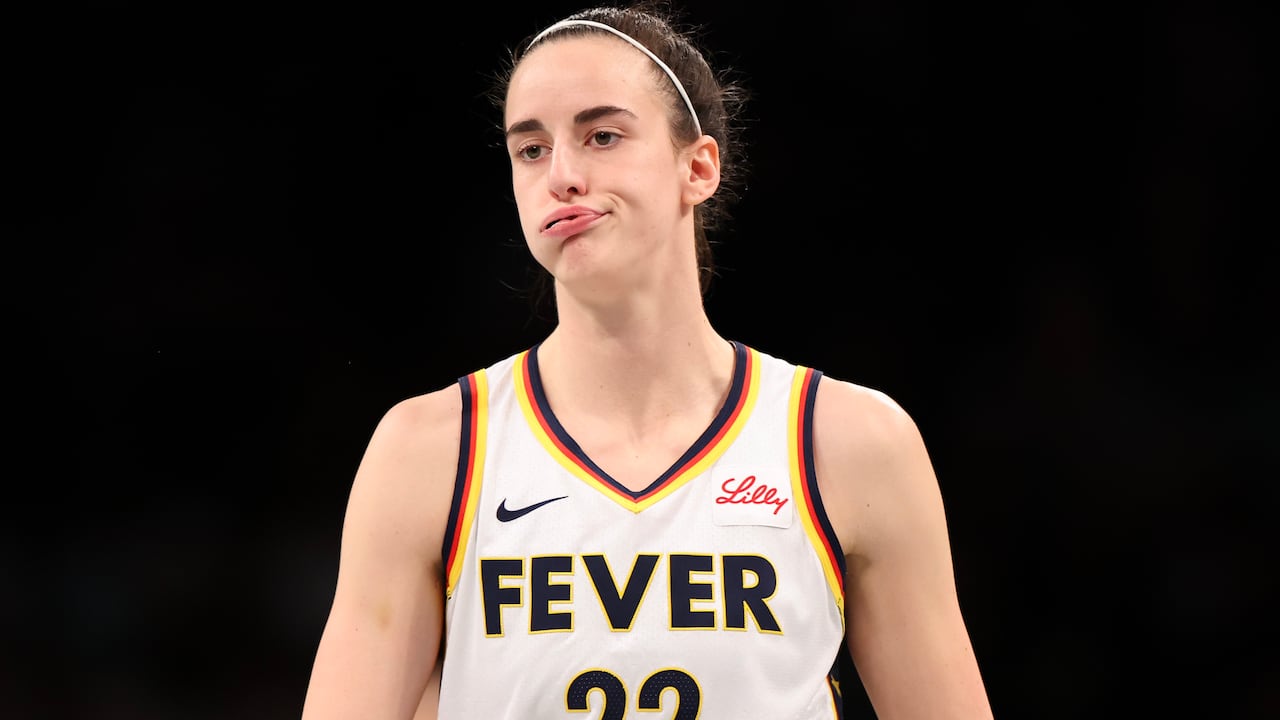
She walked toward the media still carrying the emotions of the game.
There was disappointment on her face, but there was also something else: determination.
She did not appear interested in searching for an easy explanation.
There would be no convenient excuse.
No attempt to place the responsibility somewhere else.
In the imagined postgame moment, Clark delivered a simple ten-word message:
“We own this loss, and we’ll come back even stronger.”
Ten words.
Nothing complicated.
But the message represented exactly what Indiana needed after a night like this.
A Defeat That Felt Bigger Than the Score
For Indiana, the loss was painful not simply because Minnesota won, but because the Lynx controlled enough of the game to prevent the Fever from establishing the kind of sustained momentum they needed.
Every basketball season contains nights when shots do not fall, defensive rotations arrive a fraction too late and an opponent seems to have an answer for every adjustment.
The challenge is what comes afterward.
That was the heart of Clark’s message.
Accountability is easy to talk about after victories. It becomes much more revealing after defeats.
Standing in front of reporters following a 20-point loss requires a different type of composure.
Clark’s imagined response did not erase what happened on the floor. It did not turn 66–86 into something more flattering.
Instead, it acknowledged the obvious.
Indiana had been beaten.
Now Indiana had to respond.
No Excuses, Just Responsibility
That mentality has followed Clark throughout a career played under extraordinary attention.
Every great performance creates headlines. Every difficult night creates questions.
Every victory produces enormous excitement, while every setback can quickly become the center of debate.
But leadership is not measured exclusively by what a player says when everything is going well.
Sometimes it is revealed in the moments when there is nowhere to hide.
That is what made this postgame scene so powerful.
The easy response would have been to point toward missed opportunities, questionable possessions or the difficulty of playing against one of the WNBA’s strongest teams.
Instead, the message was about ownership.
We own this loss.
Those words matter because responsibility creates the possibility of improvement.
Then came the second half:
We’ll come back even stronger.
That transformed the message from an acknowledgment of failure into a challenge for what comes next.
Minnesota Earned Its Moment
Nothing about Indiana’s disappointment should take away from Minnesota’s performance.
The Lynx earned the right to celebrate.
They played with confidence, maintained control and refused to allow Indiana’s attempts at a response to completely change the direction of the night.
When the final horn sounded, Minnesota had secured the result.
For the Lynx, it was a night to enjoy.
For the Fever, it became a night to remember for very different reasons.
The best teams eventually encounter moments that force them to look inward.
Indiana now had one.
The question was no longer what happened.
The scoreboard had already answered that.
The question was what the Fever would do about it.
Clark’s Message Goes Beyond One Game
That is where Clark’s words carried their greatest significance.
A season cannot be reduced to one result.
Neither can a team’s identity.
Championship-caliber cultures are built not only through celebrations, winning streaks and highlight-reel performances, but through uncomfortable film sessions, difficult conversations and the willingness to confront weaknesses.
Indiana’s 86–66 defeat provided plenty to examine.
But Clark’s message suggested that the Fever would not allow embarrassment or frustration to become the final chapter.
They would have to return to practice.
They would have to study what went wrong.
They would have to communicate.
And most importantly, they would have to respond together.
That is easier said than done.
But the first step is accepting responsibility.
The Scoreboard Belonged to Minnesota — The Response Belongs to Indiana
As the arena slowly emptied and the noise of Minnesota’s celebration began to fade, Indiana was left with the reality of a painful result.
Lynx 86. Fever 66.
Nothing Clark could say afterward could change those numbers.
But words can reveal mentality.
They can establish expectations.
And sometimes, after the most difficult nights, they can become the beginning of something bigger.
Indiana did not leave with the victory.
Minnesota unquestionably owned that.
But in this dramatized postgame moment, Clark made one thing clear: the Fever were not going to allow one difficult night to determine everything that came next.
There were no excuses.
There was responsibility.
There was disappointment.
But there was also belief.
Because great teams are not defined only by how loudly they celebrate when they win.
Sometimes, they reveal far more about themselves by how they stand back up after they lose.
And if Clark’s ten-word message represented Indiana’s mentality moving forward, the Fever’s response may ultimately say far more about this team than the painful 86–66 written on the scoreboard.
“We own this loss, and we’ll come back even stronger.”
The scoreboard belonged to Minnesota.
What happens next belongs to Indiana. 🏀🔥