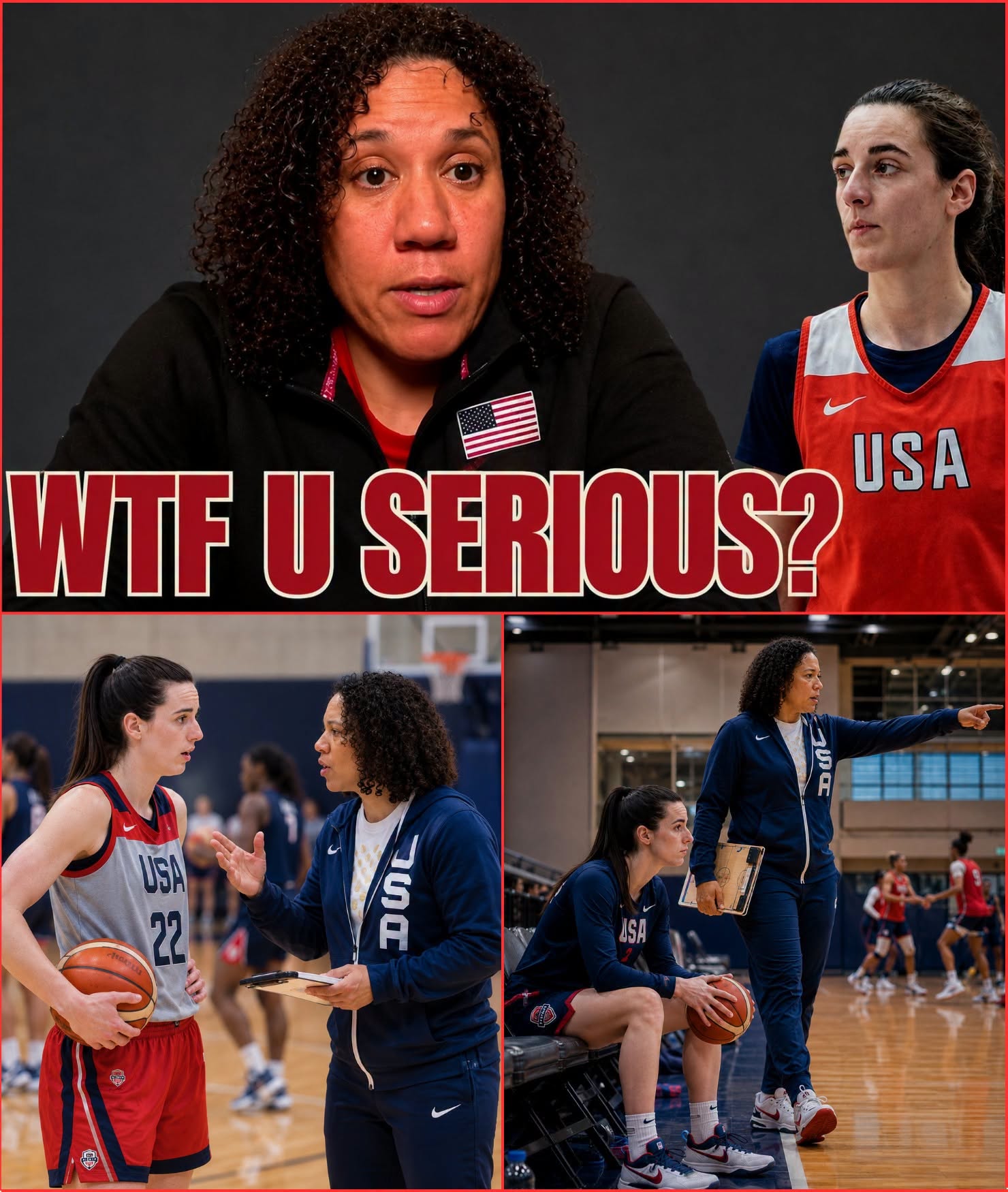

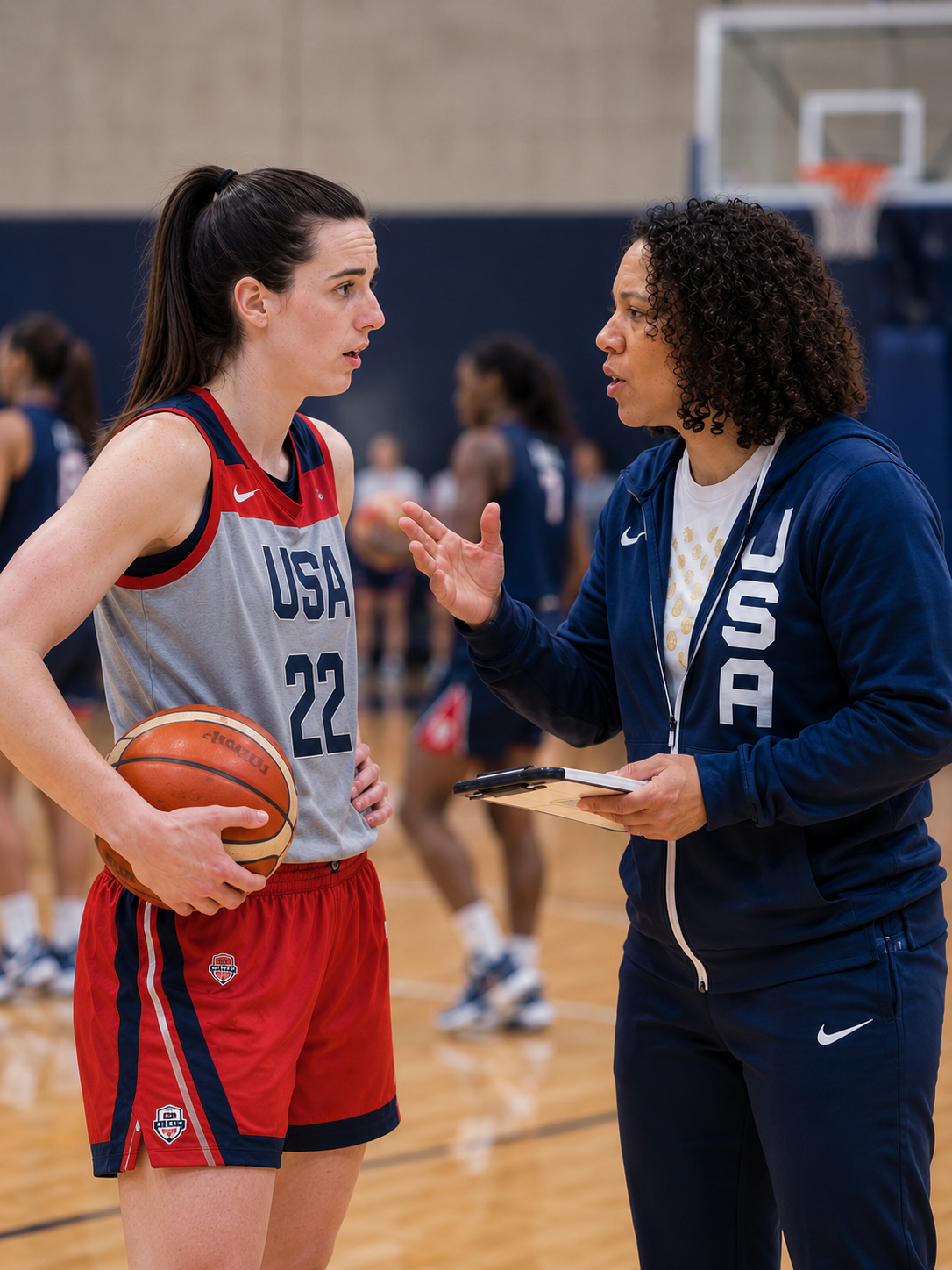
Caitlin Clark’s Team USA Role Sparks Major Debate After Kara Lawson’s Revealing Comments Before World Cup
Caitlin Clark has arrived in Berlin, the shots are already falling in practice, and anticipation surrounding her return to international basketball could hardly be higher.
But with Team USA preparing for the 2026 FIBA Women’s Basketball World Cup, one question is suddenly dominating the conversation: Will one of the most dangerous guards in basketball actually be in the starting lineup?
Head coach Kara Lawson addressed Clark’s role while speaking to reporters ahead of the tournament, and while her comments were overwhelmingly positive, one particular detail immediately caught the attention of fans.
When asked about Clark’s minutes and role, Lawson made it clear that nothing had been finalized.
“Minutes and roles, we just really haven’t got there yet with our players,” Lawson explained.
That answer was enough to ignite debate.
Because after Clark’s recent form with the Indiana Fever — and after proving herself on the international stage before — many fans believe the discussion shouldn’t be about whether she starts. They believe Team USA should be building significant portions of its offense around what she does best.
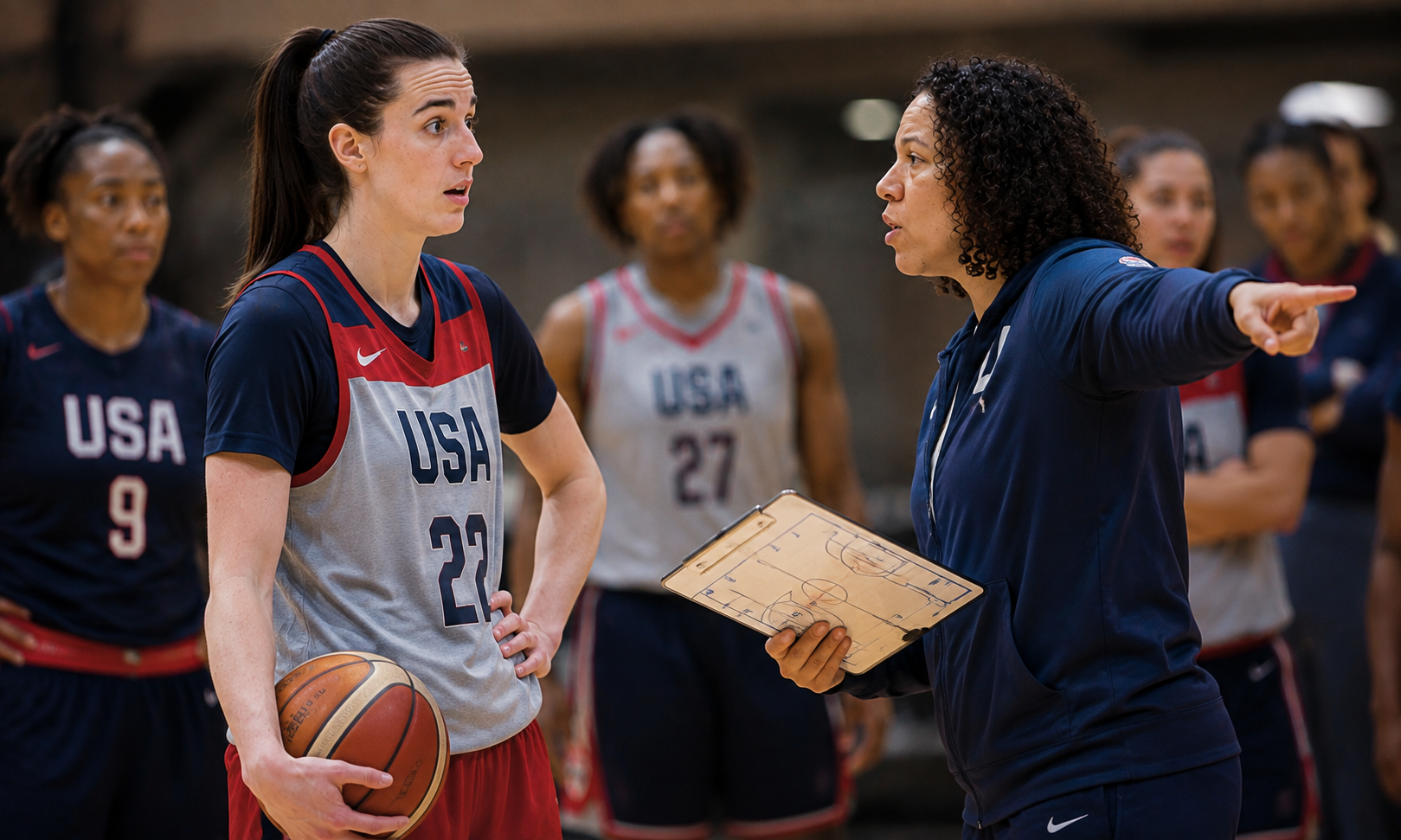
Kara Lawson Knows Exactly What Caitlin Clark Can Change
Although Lawson stopped short of announcing her rotation, what she said next may have been far more important.
She described Clark as someone capable of changing games through pace, scoring and playmaking.
That is essentially the blueprint of Clark’s game.
When she controls the ball, the offense can become dramatically faster. She pushes in transition, looks for teammates before defenses become organized and possesses shooting range that can stretch opponents far beyond the three-point line.
That combination forces defenses into uncomfortable decisions.
Pressure Clark too aggressively and she can create opportunities for teammates. Give her space and she can shoot. Commit multiple defenders to her in pick-and-roll situations and passing lanes can suddenly open elsewhere.
Lawson specifically mentioned Clark’s ability to create pace and provide spacing, suggesting the coaching staff understands the structural effect she can have on an offense.
The fascinating question is how that translates to FIBA competition.
Lawson acknowledged that international opponents may defend Clark differently from WNBA teams. That makes the early stages of the tournament something of an experiment.
Will opponents trap her?
Will they attempt to deny her the ball?
Will they force her into physical half-court possessions?
Or will her shooting range create even more problems for defenses unfamiliar with facing her regularly?
Team USA is about to find out.
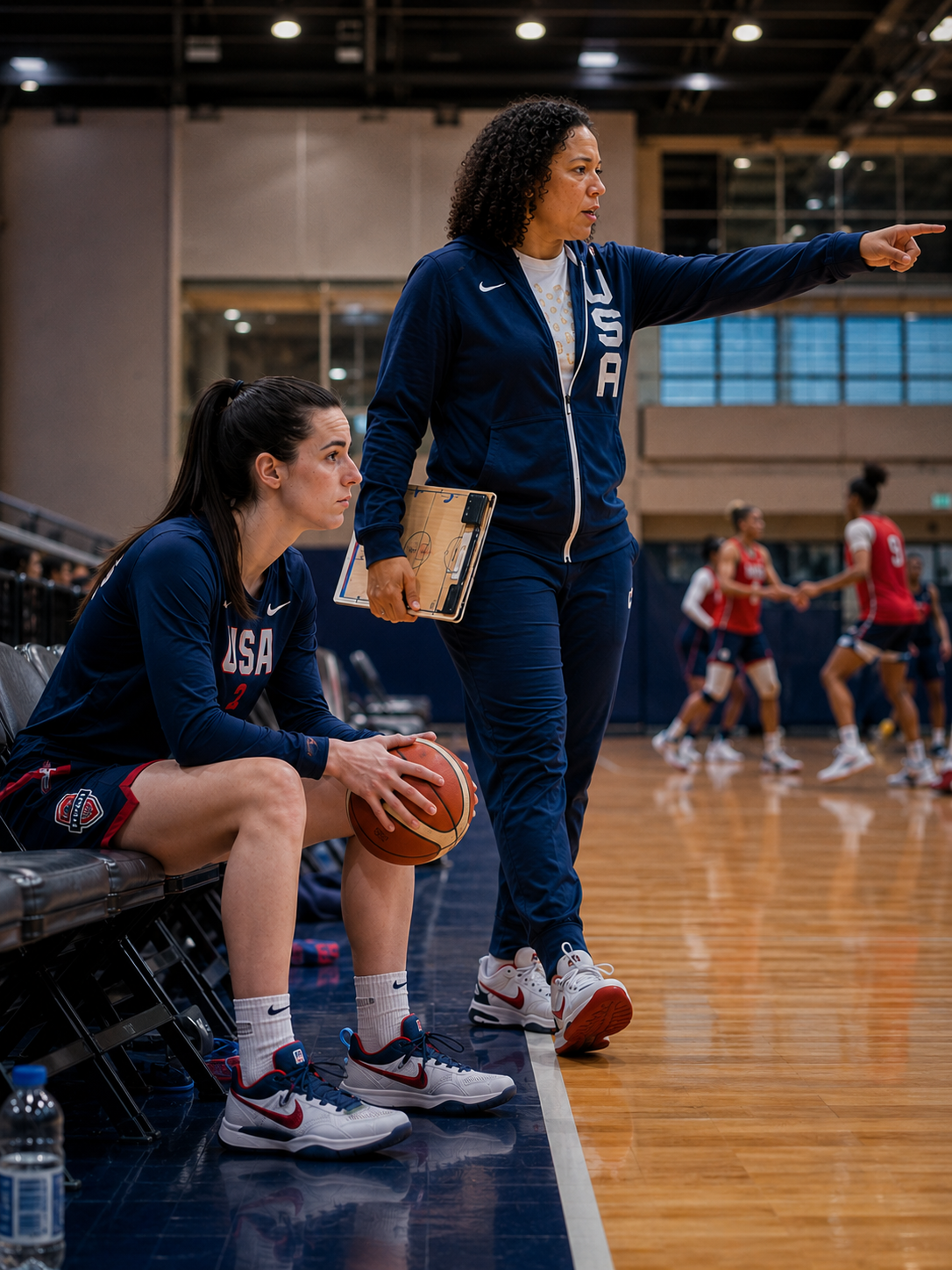
The Chelsea Gray Question Isn’t Going Away
The uncertainty surrounding Clark’s starting status naturally creates another discussion: Chelsea Gray.
Gray brings enormous experience to Team USA and has spent years establishing herself as one of the most accomplished guards of her generation. Her résumé and understanding of international basketball give Lawson an experienced option at point guard.
Clark, however, offers something very different.
She can turn a possession into transition offense almost instantly. Her willingness to throw long outlet passes rewards players who sprint the floor, while her deep shooting can pull defenders into areas they would normally never guard.
That is why the debate shouldn’t necessarily be framed as disrespect toward Gray.
It is a basketball question about style.
Does Team USA want a more controlled veteran presence to begin games, or does Lawson unleash Clark’s pace immediately and force opponents to react?
There is also the possibility that starting becomes less important than closing.
Clark could technically begin games on the bench while still playing major minutes and controlling critical stretches. Lawson’s comments did not establish a hierarchy, and practice jersey colors or temporary practice groups should not be treated as definitive evidence of the eventual starting five.
What Lawson did confirm is that she expects Clark to matter.
“We’re excited about having her on the team,” Lawson said, adding that Team USA expects her to make an impact each game.
That may ultimately be the most meaningful statement of all.
Team USA Is Entering A Different Kind Of World Cup
The Americans arrive in Berlin carrying enormous expectations.
Team USA has historically dominated the competition, but Lawson openly acknowledged that international women’s basketball continues to improve.
Rosters around the world are becoming deeper. More countries have elite players competing internationally and in American leagues, and the margin for error is shrinking.
Lawson called this potentially the most difficult World Cup to win because of that increased depth.
That makes lineup decisions even more important.
The United States still possesses extraordinary talent, but collecting stars does not automatically produce chemistry. A short international tournament demands players quickly understand roles, spacing and one another’s tendencies.
Clark could be particularly valuable in that environment because her greatest strength may not simply be scoring.
It is creation.
She can manufacture opportunities without requiring elaborate offensive actions. A defensive mistake can become an open three. A slow transition can become a layup at the other end. A second defender stepping toward her can create an open teammate.
Those qualities become incredibly valuable when preparation time is limited.
A’ja Wilson’s Absence Changes The Equation
Team USA is also adjusting to major roster changes, including the absence of A’ja Wilson and Kelsey Plum, who were ruled out for health reasons.
Lawson did not dwell on the players who are unavailable.
Instead, she emphasized building chemistry with the group currently in Berlin.
“We don’t have time to be worried about who’s not here,” she said.
It is a practical approach.
Wilson’s absence, however, inevitably changes how Team USA may create offense. Without one of basketball’s most dominant interior forces available, the Americans could have even more incentive to emphasize pace, movement and perimeter creation.
That could increase Clark’s importance.
Pair her with athletic players willing to run, shooters capable of spacing the floor and bigs who can screen and roll, and Team USA has the ingredients for an offense that can put enormous pressure on opponents.
Starting Or Not, All Eyes Will Be On Clark
Perhaps the most intriguing part of Lawson’s comments was that she didn’t overpromise.
She praised Clark without declaring her the centerpiece. She acknowledged her unique abilities while admitting the coaching staff is still learning exactly how the pieces fit together.
That means the answer will come on the court.
Clark enters Berlin with expectations unlike almost anyone else on the roster. Every deep three will generate attention. Every spectacular assist will fuel the argument that she deserves more responsibility. And if she begins the tournament on the bench, every shift in Team USA’s offensive rhythm will be analyzed.
But there is a much bigger opportunity here than a starting-lineup controversy.
Clark now has the chance to demonstrate that the qualities that have transformed Indiana’s offense can translate directly to international basketball.
Lawson already identified the weapons: pace, scoring, playmaking, spacing and the defensive attention Clark commands.
Now comes the fascinating part.
Whether Caitlin Clark hears her name announced with the starters or checks into the game minutes later, Team USA may soon discover that once she begins controlling the tempo, keeping her influence contained is much harder than deciding where she starts.